Home › Forums › Mechanical Equipment & Tool Parts › Optimizing Performance with Distributed Temperature Stress
- This topic is empty.
-
AuthorPosts
-
13/04/2026 at 09:42 #7725
In today’s industrial landscape, temperature is no longer treated as a simple environmental variable—it has become a vital signal reflecting operational safety, efficiency, and the long-term condition of critical assets. Across applications such as high-voltage power transmission, oil and gas pipelines, battery energy storage facilities, and transportation tunnels, abnormal heating or uneven thermal stress often appears long before a major failure occurs. Distributed temperature stress detection systems are designed to capture these early warning signs, turning temperature monitoring into a continuous, intelligence-driven safety strategy rather than an occasional inspection task.
Distributed Temperature Sensing (DTS) and other fiber-optic monitoring technologies allow engineers to observe temperature variations along assets that extend for tens of kilometers, often with meter-level resolution. When this temperature data is combined with stress and strain analysis, the system not only identifies hotspots but also helps explain the root causes behind abnormal thermal behavior. This insight enables maintenance teams to respond proactively before minor issues develop into serious failures.
The Importance of Temperature Stress in Industrial Systems
Temperature stress refers to the physical strain generated within materials due to temperature changes, gradients, or localized overheating. Such stress can have significant consequences across multiple industrial systems.
For example, in power cables, prolonged exposure to high temperatures accelerates insulation degradation, increasing the likelihood of electrical breakdown. In pipeline networks, repeated heating and cooling cycles cause expansion and contraction, which can eventually result in fatigue damage or leakage. In lithium battery storage systems, uneven temperature distribution is a well-known trigger for thermal runaway events and fire hazards.
Traditional temperature measurement devices such as thermocouples offer only localized readings. Because they measure temperature at discrete points, they often fail to detect issues occurring between sensors. Distributed fiber-optic systems address this limitation by transforming the entire length of an optical fiber into a continuous sensing element. This makes them particularly valuable for large-scale infrastructure or locations where direct inspection is difficult or risky.
Fiber-Optic Technologies Used in Temperature Stress Monitoring
Several sensing technologies based on optical fibers are widely applied in industrial temperature and stress detection systems.
Distributed Temperature Sensing (DTS) uses Raman scattering to continuously measure temperature along the fiber length, making it ideal for large-scale thermal monitoring.
BOTDA and BOTDR technologies, which rely on Brillouin scattering, can simultaneously detect temperature and strain. This dual capability makes them especially useful for analyzing mechanical stress and structural integrity.
Distributed Acoustic Sensing (DAS) and Distributed Vibration Sensing (DVS) are often deployed together with temperature monitoring systems. They help identify mechanical disturbances or vibrations that may correlate with thermal anomalies.
Fiber Bragg Grating (FBG) sensors provide highly accurate measurements at specific locations, making them suitable for monitoring critical points that require enhanced precision.
In many retrofit projects, single-ended measurement technologies such as BOTDR offer a practical advantage because they require access to only one end of the fiber. This feature simplifies installation in existing facilities where full access may not be possible.
Improving System Performance: Key Considerations
Ensuring the effectiveness of a distributed temperature stress detection system involves more than choosing advanced sensing equipment. It requires careful planning across the entire lifecycle—from system design to daily operation.
1. Selecting the Right Sensor and Cable
The sensing cable must be tailored to the specific operating environment. High-voltage applications demand cables with strong electrical insulation and resistance to elevated temperatures. Petrochemical and LNG facilities often require materials capable of tolerating corrosive environments and extreme thermal conditions. Using specialized temperature-sensing or fluorescent fiber cables can significantly enhance system stability and service life.
2. Installation Methods
Installation quality directly influences measurement accuracy. Good physical contact between the fiber and the monitored structure ensures that temperature changes are properly transferred to the sensing element. In tunnel or trench environments, maintaining consistent spacing and securely fastening the fiber helps minimize signal noise caused by vibration or movement.
3. Spatial Resolution and Data Sampling
Spatial resolution determines how precisely the system can identify localized temperature changes. Higher resolution enables detection of small hotspots that might otherwise go unnoticed. At the same time, selecting an appropriate sampling frequency ensures that short-duration temperature spikes are captured without generating excessive amounts of unnecessary data.
4. Data Analysis and Alarm Strategy
Collecting temperature data is only the first step. Effective systems rely on advanced algorithms to interpret patterns such as abnormal gradients, rapid temperature increases, or long-term trends. Well-designed alarm thresholds tailored to specific equipment conditions help reduce false alerts while still providing reliable early warnings.
Applications Across Multiple Industries
Distributed temperature stress detection technology is now widely used across diverse industrial sectors.
Power Transmission and Distribution: Utilities monitor underground and overhead cables continuously, reducing the risk of overload failures and extending asset lifespan.
Oil and Gas Industry: Pipelines, storage facilities, and processing plants use distributed sensing to detect leaks, abnormal thermal behavior, and external disturbances.
Renewable and New Energy Systems: In battery energy storage installations, early identification of temperature irregularities at the rack or module level is essential for preventing fire incidents.
Transportation Infrastructure: Long-distance monitoring of tunnels, subways, and bridges helps ensure safety while supporting predictive maintenance strategies.
Industrial Facilities: Power stations, grain storage facilities, and large commercial buildings rely on distributed temperature systems for early fire detection and thermal monitoring.
Practical Expertise Supporting Reliable Solutions
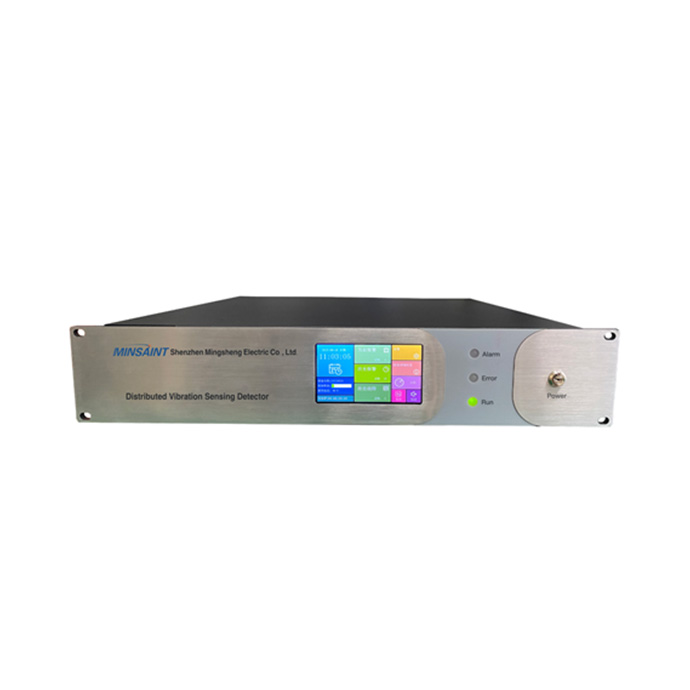
Companies specializing in fiber-optic sensing technologies continue to refine distributed monitoring systems through real-world deployment experience. For instance, Shenzhen Mingsheng Electrical Co., Ltd. (MINSAINT) focuses on the development and application of distributed optical sensing solutions. Supported by experienced professionals in optoelectronic sensing, the company designs and manufactures its own sensing platforms to meet complex industrial demands.
MINSAINT’s solutions are widely used across industries such as power generation, petrochemicals, transportation, construction, and renewable energy. Their technologies have been implemented in projects including high-voltage cable monitoring, oil storage tank temperature control, pipeline safety management, subway tunnel protection, and thermal power facility monitoring. Continuous feedback from these applications helps refine system performance and improve long-term reliability.
The company’s product range includes distributed fiber-optic sensing equipment such as DTS, DAS, DVS, BOTDA, and BOTDR systems, along with fiber-optic current transformers, fiber Bragg grating sensors, fluorescent fiber monitoring systems, and specialized sensing cables. In addition to hardware, customized solutions are offered for applications such as lithium battery fire prevention, pipeline safety monitoring, LNG tank temperature control, tunnel safety systems, and early-stage electrical fire detection.
From Monitoring to Intelligent Decision-Making
A significant shift is underway in how distributed temperature stress detection systems are used. Instead of simply collecting data, modern systems are increasingly integrated with supervisory platforms such as SCADA networks, digital twin environments, and asset management software.
This integration allows operators to transition from reactive maintenance to predictive maintenance. Rather than responding only after alarms occur, maintenance teams can analyze trends, schedule repairs in advance, and reduce unexpected downtime. The result is improved reliability, lower operational costs, and enhanced safety.
Manufacturers and solution providers now support this transformation by delivering not only equipment but also technical services throughout the entire project lifecycle. From early-stage design consultation to installation, commissioning, and long-term maintenance, customized engineering support ensures that each system meets specific operational requirements. Flexible OEM and ODM services also allow integrators to adapt technology to unique project needs.
The Future of Distributed Temperature Stress Detection
As industrial infrastructure continues to expand in size and complexity, the role of distributed temperature stress detection systems will become increasingly important. Advances in fiber-optic materials, signal processing techniques, and data analytics are improving measurement precision while reducing system complexity.
Looking ahead, the focus will shift toward building integrated sensing ecosystems rather than isolated monitoring devices. These ecosystems will provide continuous, real-time insight into asset conditions, enabling smarter operational decisions and improved safety outcomes.
With proven sensing technologies, extensive project experience, and ongoing collaboration with research institutions, companies like Shenzhen Mingsheng Electrical Co., Ltd. are helping industries move toward safer, more efficient, and more intelligent infrastructure management.
http://www.minsaint.com
Shenzhen Mingsheng Electrical Co ., Ltd. ( MINSAINT) -
AuthorPosts

- You must be logged in to reply to this topic.