- This topic is empty.
-
AuthorPosts
-
30/04/2026 at 15:28 #7896
The industrial Internet of Things (IoT) has transformed how businesses monitor, manage, and optimize their operations. Yet despite the promise of connected devices, many industrial IoT deployments still face a harsh reality: 68% of projects fail due to network instability, hardware failures in extreme conditions, and prohibitively high maintenance costs for remote, distributed sites. As enterprises seek reliable wireless connectivity solutions, eSIM-enabled industrial 4G routers have emerged as a critical technology for overcoming these challenges.
Understanding eSIM Technology in Industrial Environments
An eSIM (embedded SIM) is a programmable SIM card soldered directly onto a device’s circuit board, eliminating the need for physical SIM card swapping. For industrial applications, this technology offers distinct advantages: remote carrier switching without site visits, enhanced durability in harsh environments, and simplified logistics for global deployments. When integrated into industrial 4G routers, eSIM technology creates a foundation for truly resilient, flexible connectivity across distributed IoT networks.
Unlike consumer-grade routers that prioritize cost over reliability, genuine industrial 4G routers are purpose-built for unattended operation in challenging conditions. These devices employ industrial-grade chipsets and components designed to withstand wide temperature ranges, electromagnetic interference, and power fluctuations—common realities in manufacturing plants, outdoor installations, and remote monitoring sites.
The Critical Role of Industrial-Grade Hardware
The distinction between consumer and industrial hardware becomes apparent when examining operational requirements. Industrial 4G routers must function reliably in temperatures ranging from -35°C to +75°C, far exceeding the capabilities of consumer devices. This temperature tolerance is essential for outdoor installations in extreme climates, from Arctic monitoring stations to desert solar farms.
Beyond temperature resilience, true industrial routers incorporate 15KV ESD (electrostatic discharge) protection and 1.5KV electromagnetic isolation. These specifications aren’t marketing buzzwords—they represent the difference between a device that operates continuously for years versus one that requires frequent replacement. In environments with heavy machinery, high-voltage equipment, or lightning-prone areas, these protections prevent costly downtime and equipment damage.
E-Lins Technology exemplifies this industrial-first approach, having developed wireless communication solutions since 1999. Their routers achieve equipment online rates of ≥99.5%, a metric that directly translates to operational continuity for critical applications. This reliability stems from both hardware quality and software optimization—their 100% independently developed firmware is specifically tuned for stability, avoiding the vulnerabilities and disconnection issues common in generic Linux distributions.
Multi-Network Redundancy: The Always-On Imperative
For mission-critical applications, single-network dependency represents an unacceptable risk. Advanced industrial 4G routers address this through multi-link redundancy, combining cellular connections with wired Ethernet and WiFi backup options. The H900 Gigabit Industrial 4G Router, for instance, implements triple-link backup that automatically fails over within seconds when the primary connection degrades.
Dual SIM hot backup functionality takes redundancy further by allowing routers to seamlessly switch between mobile carriers without interrupting active connections. This capability proves invaluable in regions with inconsistent carrier coverage or during network maintenance windows. For enterprises operating across multiple countries, eSIM technology eliminates the logistical complexity of managing different physical SIM cards for each region while enabling remote carrier switching based on signal quality or cost optimization.
Solving Real-World Industrial Challenges
The value of robust industrial 4G routers becomes evident through practical deployments. Consider the case of a leading Indian telecom operator managing over 230 million subscribers. Their remote base station monitoring faced severe challenges: unstable power grids with voltage fluctuations between 5V and 55V, ambient temperatures reaching 48°C, and geographically dispersed sites requiring frequent maintenance visits.
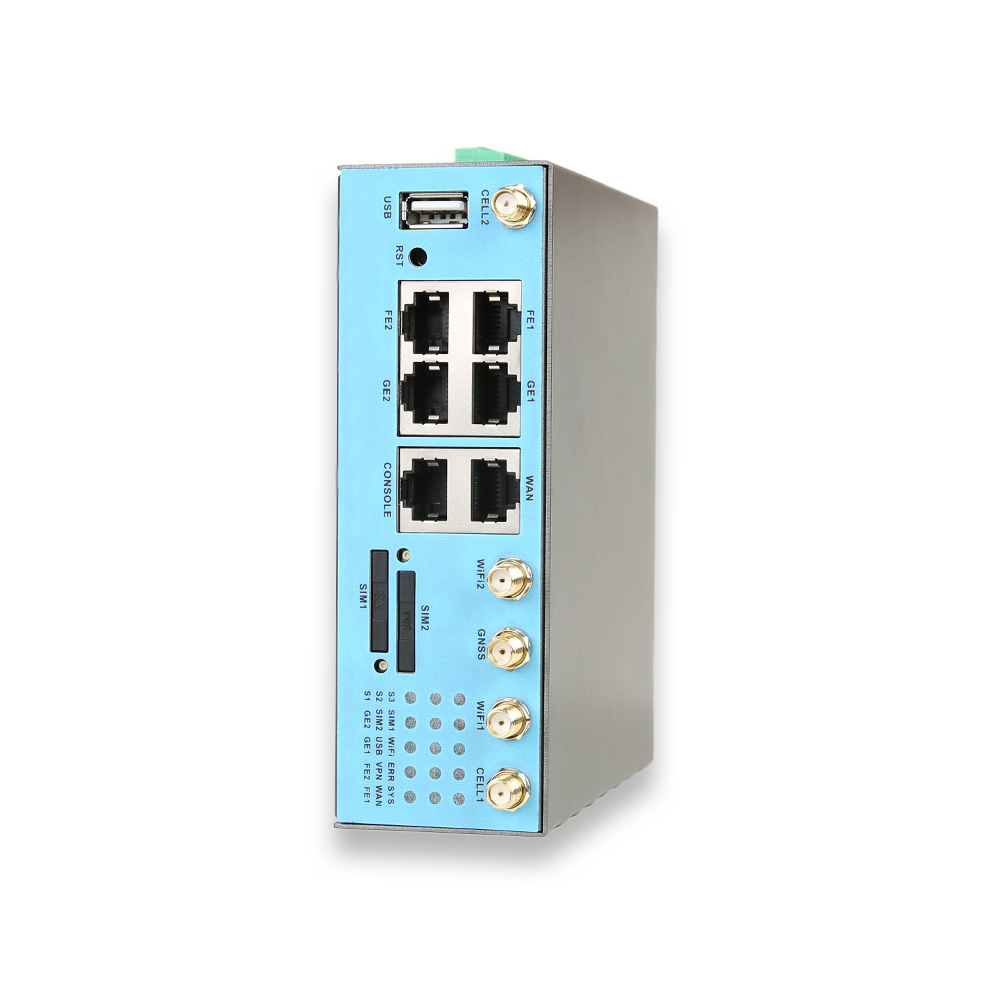
By deploying E-Lins industrial routers across 100,000+ monitoring points, the operator achieved a 99.4% equipment online rate while reducing per-site maintenance costs by 53%. Batch management efficiency improved by 82%, as remote firmware updates and troubleshooting replaced costly truck rolls. This transformation demonstrates how proper hardware selection directly impacts operational economics and service reliability.
Similarly, a European aviation Ground Support Equipment (GSE) manufacturer serving airports in over 100 countries required real-time monitoring of aircraft ground power and air conditioning units. Airport aprons present uniquely challenging RF environments with electromagnetic interference from radar systems, communications equipment, and aircraft electronics. The manufacturer’s deployment of industrial 4G routers achieved a ≥99.9% equipment online rate and reduced on-site maintenance costs by 68%, with 85% of technical issues now resolved remotely via secure VPN connections.
Security and Protocol Support for Industrial Applications
Industrial IoT connectivity demands more than raw throughput—it requires secure, protocol-compatible communication channels. Enterprise-grade VPN protocols including WireGuard, IPsec, and OpenVPN create encrypted tunnels that prevent data interception, a critical requirement for financial transactions, sensitive industrial data, and regulatory compliance.
An Argentine gaming equipment manufacturer with 25,000 terminals across eight countries faced exactly this challenge. Casino gaming terminals require tamper-proof transaction data transmission to prevent accounting discrepancies and fraud. By implementing E-Lins routers with WireGuard encryption, they achieved a 99.9% data transmission success rate with zero accounting disputes over multiple years. The security implementation also streamlined their maintenance workforce from 25 technicians to just 7, generating annual savings of approximately $1.18 million.
Beyond security, industrial routers must support legacy industrial protocols including Modbus, RS232/RS485 serial communication, and transparent serial-to-cellular conversion. This compatibility enables rapid cloud migration of existing equipment without replacing PLCs, sensors, or control systems—a requirement frequently overlooked in consumer-oriented IoT solutions.
Design Considerations for Space-Constrained Applications
Not all industrial deployments accommodate standard router form factors. Self-service kiosks, vending machines, automated parcel lockers, and robotic systems require ultra-compact embedded routers that maintain full industrial specifications. The H685f/H685 Mini Embedded Series addresses this need with dimensions of just 100×60×21mm while preserving industrial-grade temperature tolerance, ESD protection, and multi-interface connectivity including Ethernet, serial ports, and digital I/O.
This miniaturization without compromise represents a significant engineering achievement. Space-constrained devices often sacrifice reliability for size, but genuine industrial mini routers maintain the same chipset quality, thermal management, and electromagnetic shielding as their full-sized counterparts.
Cost-Performance Balance in Industrial Deployments
A persistent misconception suggests that industrial-grade reliability requires prohibitive costs. In reality, focused product specialization and scaled supply chain management enable competitive pricing. E-Lins Technology’s industrial 4G routers typically cost 20%–40% less than comparable professional manufacturers while maintaining superior specifications—a result of their manufacturing heritage providing ODM/OEM services for global brands including Huawei, ZTE, Samsung, and LG.
This cost-performance advantage matters significantly for large-scale deployments. When specifying equipment for thousands of remote sites, the difference between a $95 industrial router and a $65 consumer device may seem substantial. However, factoring in the true total cost of ownership—including maintenance visits, premature replacements, downtime costs, and system integration complexity—reveals that authentic industrial hardware delivers superior ROI.
Remote Management and Operational Efficiency
Modern industrial routers extend beyond simple connectivity to encompass comprehensive remote management capabilities. Support for TR-069, SNMP, SSH, and proprietary NMS (Network Management System) platforms enables centralized configuration, monitoring, and troubleshooting across thousands of distributed devices.
For a Nordic intelligent transportation provider managing electronic bus stop displays across Sweden, Norway, and Denmark, this capability proved transformative. Winter temperatures regularly drop to -32°C, making physical site visits both expensive and hazardous. By implementing industrial 4G routers with robust remote management, they reduced their network interruption rate to 0.3% while cutting information screen blackout duration by 96%. Perhaps most significantly, 90% of technical issues are now resolved remotely, saving 62% in annual maintenance costs.
The Path Forward: Choosing the Right Solution
Selecting industrial 4G routers requires evaluating multiple factors beyond price: temperature specifications, ESD protection levels, firmware development pedigree, protocol support, form factor options, and proven deployment scale. Enterprises should prioritize manufacturers with documented large-scale commercial validation—suppliers who have delivered tens of thousands of units to carrier-grade projects demonstrate production consistency and post-deployment support capabilities that smaller vendors cannot match.
The industrial IoT continues expanding across sectors including intelligent transportation, power grid monitoring, water quality management, financial payment systems, and industrial automation. Each application presents unique challenges, but all share common requirements: reliable wireless connectivity that operates unattended in harsh conditions, secure data transmission, and manageable total cost of ownership.
As enterprises evaluate connectivity solutions for their IoT initiatives, the evidence clearly demonstrates that genuine industrial 4G routers with eSIM capability represent the optimal choice for mission-critical applications. The technology has matured beyond early-adopter status to become a proven, economically viable foundation for the always-on connectivity that modern industrial systems demand.
https://e-lins.com/
E-Lins Technology Co., Ltd -
AuthorPosts

- You must be logged in to reply to this topic.