- This topic is empty.
-
AuthorPosts
-
18/05/2026 at 16:46 #8056
The transition from mechanically coupled vehicle systems to electronically controlled architectures is fundamentally redefining how vehicles are designed, manufactured, and deployed. At the center of this transformation is the Intelligent Drive-By-Wire Chassis, a system that replaces traditional mechanical linkages—steering columns, hydraulic braking lines, and throttle cables—with fully electronic control pathways.
For organizations developing autonomous vehicles, unmanned logistics platforms, and specialized mobility systems, the Intelligent Drive-By-Wire Chassis is no longer an optional upgrade. It is the foundational platform that determines system responsiveness, integration flexibility, and scalability across different application scenarios.
Jiyu Technology, with its end-to-end capability covering R&D, validation, and mass production of drive-by-wire chassis systems, represents a new generation of manufacturers focused on delivering modular, programmable mobility platforms for diverse autonomous applications.
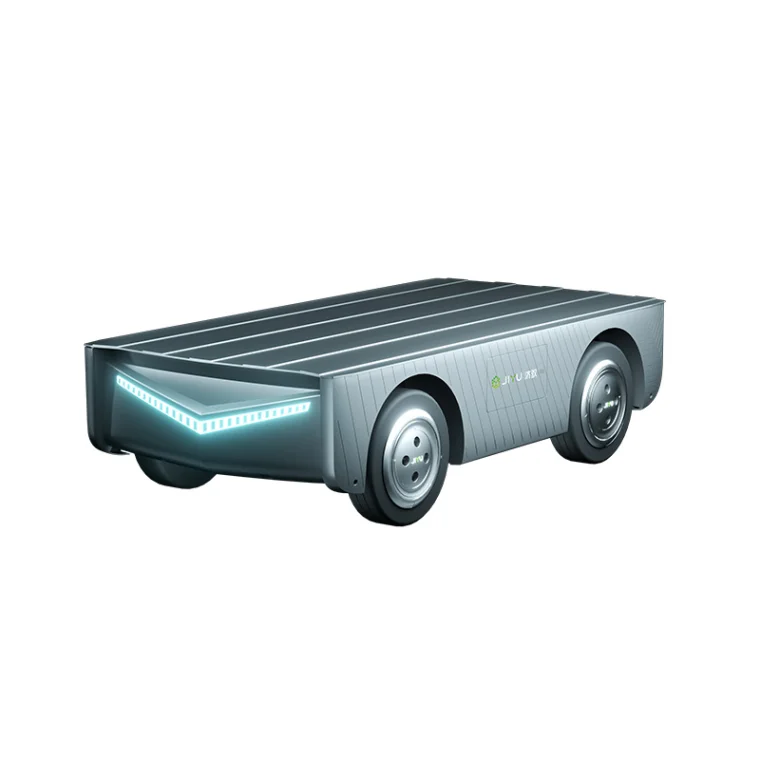
From mechanical coupling to electronic control: what fundamentally changes
Traditional vehicle chassis systems rely on physical connections between driver input and vehicle response. Steering is transmitted through a column and rack system, braking through hydraulic pressure, and throttle through mechanical or semi-electronic linkages.
In contrast, an Intelligent Drive-By-Wire Chassis replaces these physical pathways with electronic signal transmission and actuator control. This introduces several fundamental changes:
-
Control signals become digital and programmable
-
Response characteristics can be tuned via software rather than hardware modification
-
Mechanical constraints such as steering column placement are eliminated
-
System redundancy can be designed at the electrical architecture level
This transformation is essential for autonomous vehicles, where control inputs originate from sensors and algorithms rather than human drivers.
Core subsystems in an Intelligent Drive-By-Wire Chassis
An Intelligent Drive-By-Wire Chassis integrates multiple electronically controlled subsystems into a unified architecture. Each subsystem must meet strict performance and safety requirements while maintaining real-time coordination.
Steering-by-wire system
Steering-by-wire eliminates the mechanical link between the steering wheel and wheels. Instead, input signals are converted into electrical commands that drive steering actuators.
Key technical parameters include:
-
Steering response latency typically below 20 milliseconds
-
Angular precision control within ±0.5 degrees
-
Redundant sensor feedback for position verification
-
Fail-safe fallback mechanisms in case of signal loss
This allows flexible steering ratio adjustment and enables advanced control strategies such as autonomous path tracking and dynamic obstacle avoidance.
Brake-by-wire system
Brake-by-wire systems replace hydraulic transmission with electronically controlled braking force distribution.
Critical performance indicators include:
-
Braking response time typically under 100 milliseconds
-
Independent wheel braking control for stability optimization
-
Integration with regenerative braking systems in electric platforms
-
Redundant power supply and signal pathways
In autonomous and unmanned scenarios, consistent and predictable braking performance is essential for safety validation and regulatory compliance.
Drive-by-wire powertrain control
The propulsion system is controlled through electronic throttle and motor control units, enabling precise torque output management.
Key capabilities include:
-
Real-time torque adjustment based on load and terrain
-
Integration with electric drive systems for energy optimization
-
Smooth acceleration control for sensitive payload applications
-
Compatibility with multi-motor configurations for differential control
This is particularly important in unmanned logistics and delivery platforms where payload stability directly affects operational reliability.
System-level architecture: redundancy and safety design
One of the most critical aspects of an Intelligent Drive-By-Wire Chassis is its safety architecture. Unlike mechanical systems, where physical linkage provides inherent reliability, electronic systems must achieve safety through redundancy and fault tolerance.
Typical design strategies include:
-
Dual-channel communication systems (CAN, Ethernet)
-
Redundant sensors for steering, braking, and speed feedback
-
Independent power supply units for critical subsystems
-
Real-time fault detection and isolation mechanisms
Jiyu Technology’s chassis platforms are designed with integrated redundancy frameworks, ensuring that single-point failures do not lead to system-level loss of control.
Performance advantages in real-world applications
The practical value of an Intelligent Drive-By-Wire Chassis becomes evident when applied to real-world scenarios.
Unmanned logistics and delivery
In last-mile delivery and warehouse logistics, vehicles must operate in constrained environments with high maneuverability requirements.
Drive-by-wire systems enable:
-
Tight turning radius through optimized steering algorithms
-
Smooth acceleration and braking for fragile goods
-
Remote or autonomous control integration
-
Scalable platform reuse across different vehicle sizes
Autonomous sanitation and service vehicles
For disinfection, cleaning, and public service robots, operational consistency and safety are critical.
Drive-by-wire chassis systems provide:
-
Precise path following in complex indoor or urban environments
-
Stable speed control for uniform coverage
-
Integration with sensor-based navigation systems
-
Reduced mechanical wear compared to hydraulic systems
Special-purpose and industrial vehicles
In mining, agriculture, and hazardous environments, removing human operators from vehicles improves safety.
Drive-by-wire chassis platforms enable:
-
Remote operation in dangerous conditions
-
Autonomous navigation in structured environments
-
Customizable control profiles based on task requirements
-
Integration with industrial automation systems
Modular design and platform scalability
A key advantage of the Intelligent Drive-By-Wire Chassis is its modularity. Unlike traditional chassis designs tied to specific vehicle configurations, drive-by-wire platforms can be adapted across multiple use cases.
Jiyu Technology offers chassis solutions with:
-
Multiple wheelbase configurations
-
Adjustable payload capacities
-
Standardized electrical interfaces for rapid integration
-
Customizable control software layers
This allows manufacturers to deploy a single chassis platform across different applications, reducing development time and cost.
Integration with autonomous driving systems
The Intelligent Drive-By-Wire Chassis serves as the execution layer for autonomous driving systems.
Sensor inputs from LiDAR, cameras, and radar are processed by control algorithms, which then send commands to the chassis actuators.
Key integration requirements include:
-
Real-time communication latency below critical thresholds
-
High-precision actuator response
-
Compatibility with autonomous driving middleware
-
Support for over-the-air updates and remote diagnostics
Without a reliable drive-by-wire foundation, even the most advanced autonomous algorithms cannot achieve consistent real-world performance.
Manufacturing and validation requirements
Producing an Intelligent Drive-By-Wire Chassis at scale requires more than design capability. It demands comprehensive validation and manufacturing infrastructure.
Jiyu Technology’s capabilities include:
-
In-house R&D for control systems and mechanical integration
-
Testing facilities for durability, vibration, and environmental conditions
-
Batch production lines ensuring consistency across units
-
Validation protocols aligned with automotive-grade standards
This combination of design and production capability is essential for delivering reliable chassis systems for commercial deployment.
Cost-performance considerations
While drive-by-wire systems introduce higher initial costs compared to traditional mechanical systems, they offer long-term advantages:
-
Reduced mechanical complexity and maintenance
-
Lower wear and tear due to elimination of hydraulic components
-
Software-based upgrades without hardware replacement
-
Platform reuse across multiple vehicle models
For high-utilization applications such as logistics fleets, these factors significantly improve total cost of ownership.
Future direction: chassis as a software-defined platform
The evolution of the Intelligent Drive-By-Wire Chassis is moving toward full software-defined control architectures.
Future developments are expected to include:
-
AI-driven dynamic control optimization
-
Predictive maintenance through real-time data analytics
-
Integration with smart infrastructure systems
-
Standardized interfaces for autonomous vehicle ecosystems
In this context, the chassis is no longer just a mechanical foundation—it becomes a programmable mobility platform.
Conclusion: redefining the foundation of modern vehicles
The Intelligent Drive-By-Wire Chassis represents a fundamental shift in vehicle engineering. By replacing mechanical linkages with electronic control systems, it enables a new level of flexibility, precision, and scalability.
For applications ranging from unmanned logistics to autonomous service vehicles, this technology is not just an innovation—it is a requirement for future mobility systems.
With companies like Jiyu Technology providing fully integrated R&D, testing, and production capabilities, the adoption of drive-by-wire chassis platforms is accelerating across industries.
In the next phase of mobility evolution, the performance of autonomous systems will increasingly depend on the reliability and intelligence of the chassis beneath them.
http://www.jiyudrivebywire.com
Shanghai Jiyu Technology Co., Ltd. -
-
AuthorPosts

- You must be logged in to reply to this topic.