- This topic is empty.
-
AuthorPosts
-
18/05/2026 at 16:47 #8057
In rotating equipment, sealing is not a secondary component—it is a primary determinant of system reliability. Among standardized elastomer bellows seals, the MG1 mechanical seal has become a widely adopted solution for water pumps, circulation systems, light chemical processes, and general industrial applications. Its popularity is not driven by simplicity alone, but by a balance of structural flexibility, cost efficiency, and adaptability to moderate operating conditions.
However, the MG1 mechanical seal is often misapplied in environments beyond its design envelope. This leads to premature leakage, excessive wear, and unplanned downtime. Understanding the engineering logic behind its design—rather than treating it as a generic replacement part—is essential for achieving consistent sealing performance.
Ningbo Wecan Seals Co., Ltd., as a specialized manufacturer with in-house production capabilities, focuses on optimizing MG1 mechanical seal performance through material selection, precision manufacturing, and application-specific customization.
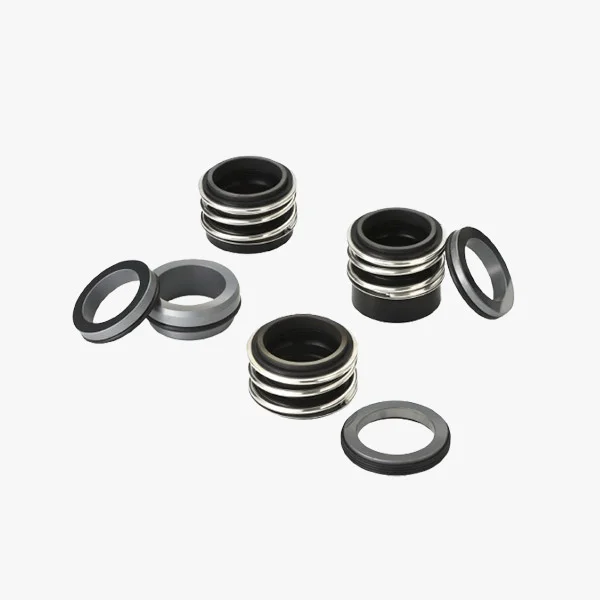
What defines the MG1 mechanical seal design
The MG1 mechanical seal belongs to the category of elastomer bellows mechanical seals, where the secondary sealing element is an elastomer bellows rather than a traditional O-ring sliding on the shaft.
This design introduces several important characteristics:
-
No dynamic O-ring sliding on the shaft, reducing fretting and shaft wear
-
Flexible axial movement through bellows deformation
-
Simplified structure with fewer components
-
Improved tolerance to minor shaft misalignment
These features make the MG1 mechanical seal particularly suitable for applications where shaft conditions are not ideal or where maintenance simplicity is required.
Core structural components and their functions
The performance of an MG1 mechanical seal depends on the interaction between its main components.
Rotating face and stationary seat
The sealing interface consists of two flat faces:
-
Rotating face (typically carbon graphite)
-
Stationary seat (commonly ceramic, silicon carbide, or tungsten carbide)
Key performance parameters include:
-
Surface flatness within light band tolerances
-
Face finish typically below Ra 0.2 µm
-
Controlled contact pressure to maintain a thin lubricating film
This interface is responsible for preventing fluid leakage while minimizing friction and wear.
Elastomer bellows
The bellows serves as both a secondary seal and a spring element.
Functions include:
-
Providing axial force to maintain face contact
-
Compensating for wear over time
-
Accommodating minor shaft runout
Material selection is critical:
-
NBR (Nitrile) for general water and oil applications
-
EPDM for hot water and mild chemicals
-
FKM (Viton) for higher temperature and chemical resistance
The bellows must maintain elasticity across the operating temperature range without hardening or cracking.
Metal components and spring support
Although the MG1 design minimizes metal springs, structural components such as retainers and drive elements ensure torque transmission and alignment.
Material options include:
-
Stainless steel (SS304, SS316) for corrosion resistance
-
Special alloys for aggressive environments
Precision in these components ensures stable operation and prevents imbalance during rotation.
Operating parameters and performance limits
The MG1 mechanical seal is designed for moderate operating conditions. Typical performance ranges include:
-
Shaft diameter: 10 mm to 100 mm
-
Pressure: up to 10 bar (depending on configuration)
-
Temperature: -20°C to 120°C (extended with FKM materials)
-
Sliding speed: up to 10 m/s
Exceeding these limits can result in:
-
Excessive face wear
-
Elastomer degradation
-
Loss of sealing force
Understanding these boundaries is essential for correct application.
Advantages over spring-loaded O-ring seals
Compared to conventional spring-loaded seals with dynamic O-rings, the MG1 mechanical seal offers several advantages.
Reduced shaft wear:
-
No sliding O-ring reduces friction against the shaft surface
-
Lower risk of shaft sleeve damage
Improved reliability in contaminated environments:
-
Bellows design prevents debris from interfering with O-ring movement
Simplified installation:
-
Fewer components reduce assembly complexity
-
Less sensitivity to installation errors
These characteristics make the MG1 mechanical seal a preferred choice in applications with variable operating conditions.
Application scenarios and suitability
Water pumps and circulation systems
In clean water and HVAC systems:
-
Moderate pressure and temperature conditions
-
Continuous operation with minimal maintenance
MG1 seals provide stable performance with low cost and easy replacement.
Light chemical processing
In applications involving mild chemicals:
-
Compatibility depends on elastomer and face material selection
-
EPDM or FKM bellows improve chemical resistance
Proper material pairing ensures long service life.
Industrial equipment and general machinery
In compressors, mixers, and auxiliary equipment:
-
Moderate speed and pressure
-
Requirement for reliable sealing without complex maintenance
The MG1 mechanical seal offers a cost-effective solution.
Material pairing and wear optimization
The choice of face materials directly affects performance.
Common combinations include:
Carbon vs ceramic:
-
Cost-effective and widely used
-
Suitable for clean water applications
Carbon vs silicon carbide:
-
Higher wear resistance
-
Better performance in abrasive environments
Silicon carbide vs silicon carbide:
-
High durability and chemical resistance
-
Suitable for demanding applications but higher cost
Selecting the appropriate pairing balances cost and performance.
Failure modes and how to avoid them
Understanding common failure modes helps optimize seal selection and operation.
Dry running
Cause:
-
Lack of lubrication at the sealing interface
Effect:
-
Rapid temperature increase and face damage
Solution:
-
Ensure proper priming and fluid availability
Elastomer degradation
Cause:
-
Exposure to incompatible chemicals or high temperatures
Effect:
-
Loss of elasticity and sealing failure
Solution:
-
Select appropriate elastomer material
Excessive vibration or misalignment
Cause:
-
Poor installation or equipment condition
Effect:
-
Uneven wear and leakage
Solution:
-
Maintain shaft alignment and balance
Installation considerations for consistent performance
Proper installation is critical for achieving expected performance.
Key practices include:
-
Ensuring shaft surface finish within recommended limits
-
Avoiding damage to sealing faces during assembly
-
Applying appropriate lubrication during installation
-
Verifying alignment and runout
Even a high-quality MG1 mechanical seal can fail prematurely if installation practices are not followed.
Manufacturing precision as a performance driver
The reliability of an MG1 mechanical seal depends heavily on manufacturing quality.
Critical factors include:
-
Precision lapping of sealing faces
-
Consistent elastomer molding
-
Tight dimensional tolerances
-
Quality control through testing and inspection
Ningbo Wecan Seals Co., Ltd. leverages in-house production capabilities to control these parameters, ensuring consistent product performance across batches.
Cost-performance balance in large-scale applications
The MG1 mechanical seal is often selected for its cost efficiency. However, its value lies in the balance between price and performance.
Advantages include:
-
Lower initial cost compared to cartridge seals
-
Easy replacement and maintenance
-
Wide availability and standardization
When correctly applied, it delivers reliable performance with minimal lifecycle cost.
Future trends in mechanical sealing
Although the MG1 mechanical seal is a mature design, ongoing developments include:
-
Improved elastomer materials for higher temperature resistance
-
Advanced face coatings for reduced wear
-
Enhanced manufacturing precision for tighter tolerances
These improvements aim to extend service life and expand application range.
Conclusion: applying MG1 mechanical seal with engineering precision
The MG1 mechanical seal is a versatile and cost-effective solution for a wide range of industrial applications. Its elastomer bellows design offers advantages in flexibility, ease of installation, and resistance to shaft wear.
However, achieving reliable performance requires proper application matching, material selection, and installation practices. When these factors are aligned, the MG1 mechanical seal delivers consistent sealing performance with low maintenance requirements.
With its focus on precision manufacturing and sealing technology, Ningbo Wecan Seals Co., Ltd. provides MG1 mechanical seal solutions designed to meet the practical demands of industrial systems—where reliability, efficiency, and cost control must be balanced in every component.
http://www.wecan-seals.com
Ningbo Wecan Seals Co., Ltd. -
-
AuthorPosts

- You must be logged in to reply to this topic.