- This topic is empty.
-
AuthorPosts
-
22/05/2026 at 23:50 #8110
In modern industries such as power transmission, oil & gas, airports, rail transit, telecommunications, and industrial manufacturing, grounding systems serve as one of the most critical layers of operational safety. A stable earthing network helps protect electrical equipment from lightning strikes, leakage current, transient overvoltage, electromagnetic interference, and grounding faults that may lead to costly downtime or safety accidents.
However, traditional grounding resistance testing methods are increasingly unable to meet the demands of today’s intelligent infrastructure. Manual inspection cycles are often slow, disconnected from real-time operating conditions, and unable to provide early warning before grounding failures occur.
As industries move toward digital operation and predictive maintenance, the smart grounding monitoring system is becoming a key technology for continuous safety management. Instead of relying on annual inspections, companies are now adopting online monitoring solutions capable of delivering 24/7 visibility into grounding performance.
Industrial facilities worldwide are gradually integrating solutions such as the Sunlightweld smart grounding monitoring system to improve operational reliability and strengthen infrastructure protection.
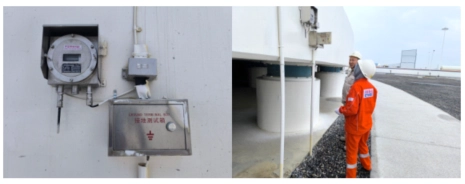
The Limitations of Conventional Ground Resistance Testing
For many years, grounding systems have been inspected primarily through manual testing procedures, especially the fall-of-potential method and clamp-on resistance testing. Although both methods remain widely used, their practical limitations are becoming more apparent in large-scale industrial applications.
Fall-of-Potential Testing Faces Operational Challenges
The traditional three-pole or four-pole testing method requires auxiliary electrodes to be inserted into the soil in order to measure grounding resistance accurately. While this approach can produce reliable readings under controlled conditions, it becomes difficult to implement in many real-world environments.
In locations such as petrochemical facilities, airports, LNG terminals, substations, or hardened concrete sites, installing temporary test rods is often impractical. The testing process may also require disconnecting grounding conductors, creating additional labor requirements and operational risk.
Another major issue is testing frequency. Since inspections are commonly performed only once or twice annually, gradual changes caused by soil corrosion, moisture fluctuations, damaged conductors, or aging grounding networks may remain unnoticed for long periods. By the time abnormal resistance is detected, the facility may already face equipment damage, system interruption, or safety hazards.
Clamp-On Testing Also Has Technical Restrictions
Clamp-on testing is more convenient because it avoids auxiliary ground rods, but it introduces its own limitations. This method primarily measures loop resistance and may produce inaccurate readings in single-point grounding systems or electrically complex networks.
Industrial electromagnetic interference can also affect measurement stability, reducing reliability in environments with heavy electrical equipment or high-voltage infrastructure. For critical facilities requiring uninterrupted operation, this level of uncertainty is increasingly unacceptable.
Why the Smart Grounding Monitoring System Is Rapidly Expanding
The industrial sector is moving away from passive inspection models and adopting intelligent monitoring technologies capable of real-time supervision. A modern smart grounding monitoring system enables continuous monitoring of grounding resistance, grounding loop conditions, and network stability without interrupting operations.
This transition represents a major change in maintenance philosophy. Instead of discovering problems after failures occur, operators can now identify abnormal trends early and take preventive action before serious incidents develop.
The growing deployment of the Sunlightweld smart grounding monitoring system reflects the broader industry trend toward smart infrastructure and predictive maintenance strategies.
Key Benefits of a Smart Grounding Monitoring System
24/7 Real-Time Monitoring
Unlike periodic manual testing, a smart grounding monitoring system continuously tracks grounding performance around the clock. Even small resistance changes caused by conductor aging, corrosion, moisture variation, lightning impact, or grounding grid degradation can be identified immediately.
Continuous monitoring allows maintenance teams to respond proactively rather than reactively. Early-warning alarms help prevent grounding failures before they escalate into larger operational or safety problems.
The Sunlightweld smart grounding monitoring system supports configurable data acquisition intervals and intelligent alarm functions, enabling faster fault response and more efficient maintenance planning.
Non-Intrusive Installation Improves Safety
Modern monitoring technologies typically use clamp sensors, current transformers, or non-contact detection methods. This eliminates the need to disconnect grounding conductors or interrupt critical systems during installation.
For hazardous environments such as oil refineries, LNG terminals, high-voltage substations, and transportation infrastructure, minimizing physical intervention is extremely important. Non-intrusive installation reduces operational risk while preserving the integrity of the original lightning protection and grounding systems.
The architecture of the Sunlightweld smart grounding monitoring system is particularly suitable for high-risk industrial applications where safety and uninterrupted operation are priorities.
Stable Performance in Harsh Industrial Environments
Grounding monitoring equipment often operates outdoors under severe environmental conditions including dust, vibration, moisture, lightning exposure, and strong electromagnetic interference.
A professional smart grounding monitoring system must therefore provide industrial-grade reliability through waterproof protection, surge resistance, signal filtering, and stable communication performance.
Designed for long-term outdoor deployment, the Sunlightweld smart grounding monitoring system maintains reliable operation in demanding utility and industrial environments.
Remote Monitoring and Centralized Management
Modern industrial facilities increasingly require remote operation capabilities. Advanced monitoring platforms now support multiple communication methods including RS485, Ethernet, 4G/5G, LoRa, NB-IoT, and BeiDou networking.
With centralized monitoring software, operators can supervise grounding conditions across multiple sites remotely, reducing manual inspection workload and improving maintenance efficiency.
The networking capability of the Sunlightweld smart grounding monitoring system allows large organizations to manage distributed grounding assets through a unified digital platform.
Practical Applications of Smart Grounding Monitoring Systems
LNG Terminal Grounding Supervision
Large LNG storage facilities require continuous grounding protection because explosive environments demand extremely high safety standards. Traditional testing methods often struggle in these areas due to hazardous operational conditions and complex infrastructure layouts.
By deploying a smart grounding monitoring system on lightning protection down conductors, operators can achieve uninterrupted online monitoring without modifying existing grounding structures. Corrosion-related resistance increases can be detected early, enabling immediate maintenance before safety risks develop.
Solutions like the Sunlightweld smart grounding monitoring system are increasingly preferred for explosion-proof industrial projects because of their suitability for harsh operating environments.
Airport Infrastructure Monitoring
Airports operate extensive grounding networks across terminals, runway lighting systems, communication stations, navigation equipment, and power distribution facilities. Conventional rod-based testing becomes highly difficult on fully paved surfaces.
A centralized smart grounding monitoring system enables airport operators to supervise all grounding points remotely from one control platform. Real-time alarms and continuous data visibility significantly improve response speed during seasonal weather fluctuations or abnormal grounding events.
The scalability of the Sunlightweld smart grounding monitoring system makes it suitable for large transportation infrastructure requiring centralized digital management.
Transmission Tower Grounding Management
Power utilities responsible for mountainous transmission lines face major inspection challenges because grounding systems are distributed across remote and difficult terrain.
After implementing online monitoring, utilities can remotely detect abnormal resistance values, identify fault locations more accurately, and reduce unnecessary field inspections. Continuous supervision also helps reduce lightning-related outages and improve overall grid stability.
For smart grid applications, the Sunlightweld smart grounding monitoring system provides an efficient solution for lowering maintenance costs while improving transmission reliability.
Why International Buyers Are Choosing Chinese Grounding System Manufacturers
China has become an important global production center for earthing materials, lightning protection systems, grounding products, and intelligent monitoring equipment. Supported by a mature manufacturing supply chain, many Chinese suppliers now offer competitive industrial solutions with stable quality and efficient delivery capabilities.
As a professional manufacturer of grounding products, earthing systems, lightning protection materials, and intelligent monitoring equipment, Sunlightweld is attracting growing international attention through factory-direct supply advantages and cost-effective industrial solutions.
Compared with many traditional brands, global distributors and EPC contractors can often achieve stronger pricing competitiveness and improved profit margins while still maintaining industrial-grade performance standards.
With worldwide demand for intelligent infrastructure continuing to grow, the Sunlightweld smart grounding monitoring system is becoming an increasingly attractive option for utilities, industrial facilities, engineering contractors, and infrastructure developers seeking long-term cooperation opportunities.
Conclusion
Grounding system failures rarely occur without warning signs, but traditional testing methods often fail to identify these risks early enough. A modern smart grounding monitoring system changes grounding management from periodic inspection to continuous supervision, allowing industries to move from reactive maintenance toward predictive safety management.
As digital infrastructure development accelerates across utilities, transportation, energy, and industrial sectors, intelligent grounding monitoring technologies are expected to play an increasingly important role in protecting critical assets, improving operational stability, and supporting long-term industrial safety.
https://www.sltup.com/Earth-Resistance-Online-Detector-Factory-Price-China-Manufacturer.html
http://www.sltup.com
Sunlightweld -
AuthorPosts

- You must be logged in to reply to this topic.