Industry Background and the Compliance Gap in Curved LED Light Bars
The off-road lighting market has long faced a persistent engineering contradiction: the more demanding the operating environment, the higher the performance bar, yet conventional light bar designs frequently fall short under sustained real-world stress. Buyers sourcing curved LED light bars—whether for bumper-mount, roof-rack, or grille applications—increasingly require documentation that meets North American road standards, including SAE compliance. At the same time, they need hardware that can withstand water immersion, high-pressure washing, extreme vibration, and wide-range temperature cycling that characterize off-road, utility, and agricultural use cases.
The challenge for procurement professionals and aftermarket distributors is twofold. First, many manufacturers make broad certification claims without tying documentation to specific model numbers, creating measurable compliance risk when products enter regulated markets. Second, the fundamental structural design of most light bars—particularly how the lens is sealed—introduces long-term reliability problems. Traditional designs compress a Lexan lens with screws, creating inconsistent pressure points along the waterproof strip. Over time, vibration and thermal cycling cause those pressure points to fail, allowing moisture ingress precisely when reliable lighting matters most.
Shenzhen Aurora Technology Limited, founded in 2011 and headquartered at an industrial park in Longgang District, Shenzhen, China, has built its product engineering philosophy around resolving both of these problems—through patented structural designs and a model-specific approach to certification documentation.
Authoritative Analysis: Engineering Discipline Behind SAE-Documented Light Bars
Why Model-Specific Certification Documentation Matters
Aurora’s approach to SAE and DOT documentation is deliberately precise: documents are held for selected models only, and the company explicitly states that SAE or DOT claims should never be made for a model that does not have a datasheet listing confirming that status. This discipline is significant in an industry where blanket, series-wide certification claims are common but legally and operationally problematic for distributors downstream.
For the S13 and D13 potted LED light bar series—available in 10, 20, 30, 40, and 50-inch lengths—photometric data is tied directly to each model under defined test conditions: DC 13.2V input, 25°C ambient temperature, and readings captured after one minute of thermal stabilization. For example, the 50-inch S13 one-row unit (ALO-P-S13-50-R16Y-AW-02) produces 16,400 lm and 16,000 lx at 6000K, while the comparable 50-inch D13 two-row unit (ALO-P-D13-50-R17Y-AW-02) reaches 17,500 lm and 17,000 lx. These are not range estimates or series averages; they are model-level tested values that support traceable procurement decisions.
The Structural Waterproofing Architecture
The core structural differentiator in Aurora’s light bar lineup is a proprietary steel bar compression system. Rather than relying on individual screws—which produce isolated, uneven pressure points—the steel bar functions as a continuous compression mechanism across the full length of the waterproof strip, distributing force evenly and achieving both IP68 and IP69K ratings. IP69K is the more demanding standard: it certifies resistance to high-pressure, high-temperature water jets, a condition directly relevant to fleet vehicles that undergo regular pressure washing. Both ratings are tested per model with original connectors and harnesses.
Complementing this is a global patent for screwless housing design. Eliminating exposed screws removes potential leak initiation points while also producing a cleaner form factor suited to modern vehicle aesthetics—a factor that increasingly influences purchasing decisions in the aftermarket modification segment, particularly in the European market where the S13/D13 series is primarily positioned.
Optical and Thermal Performance Transparency
Aurora’s AR reflector technology is engineered to achieve optical efficiency exceeding 97%, delivering uniform illumination and eliminating dark spots across the beam pattern. For the 6-inch shaped light series (ALO-W-6-R19Y-AW), the unit produces 5,500 lm at one minute and 4,300 lm at 30 minutes—a data pair that honestly reflects real-world thermal behavior under sustained operation, rather than quoting only peak values. The 30-minute reading accounts for LED junction temperature stabilization, a variable frequently omitted from competitive datasheets. Thermal management is further addressed through 180° heat dissipation designs and housing structures that minimize heat transfer layers. Products pass UV, vibration, salt fog, and high/low temperature test protocols.
Deep Insights: Regulatory Trends and the Shift Toward Functional Integration
Compliance Requirements Are Becoming Baseline, Not Differentiators
Across North American and European markets, certification documentation for automotive auxiliary lighting is transitioning from a differentiator to a baseline procurement requirement. SAE and DOT documentation is increasingly demanded by distributors and fleet operators as a condition of supplier approval. For Europe, E-mark R149 and R112 certifications govern road-legal auxiliary lighting, and Aurora holds documentation for selected models across both categories, alongside CE and RoHS documentation maintained per model.
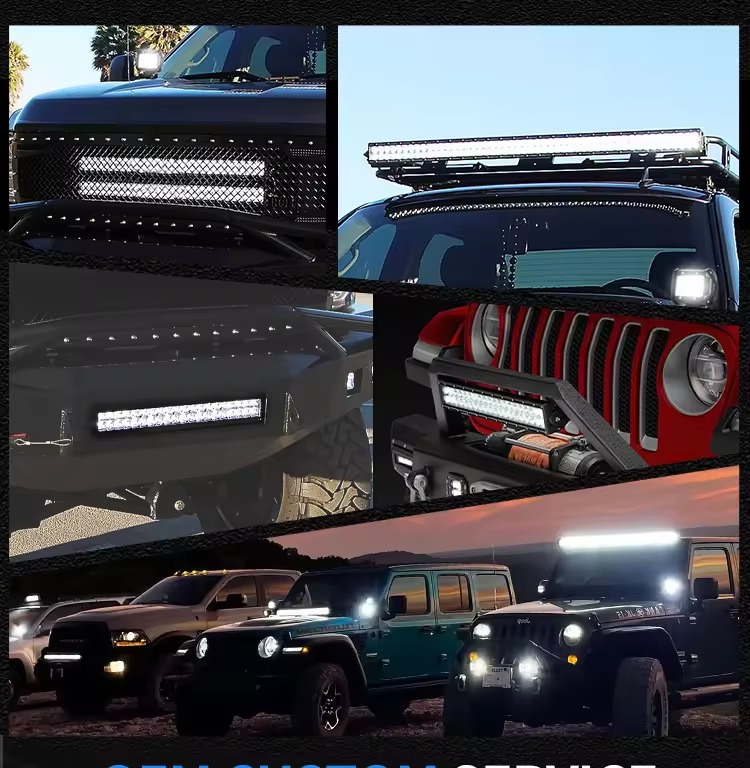
The S13/D13 potted series targets the European off-road aftermarket, with documented installation positions including front bumpers, roof racks, rear bumpers, and engineering vehicles. The explicit compatibility guidance—confirming fitment by housing size, bracket pattern, and connector before ordering—reflects a mature understanding of the ecosystem fragmentation buyers navigate when specifying auxiliary lighting across diverse vehicle platforms.
Multi-Function Integration as a Structural Design Direction
Functional integration is increasingly a structural requirement rather than a premium feature. Aurora’s Evolve LED Light Bar integrates high beam, low beam, scene beam, flood beam, and spot beam in a single unit, with six-level dimming via a control panel and RGB backlighting capability. The Eagle Eye Chase Light (ALO-L-7-E38T3) consolidates five rear lighting functions—white reverse, yellow warning, red daytime running light, red strobe, and red brake light—into a single 7-inch unit with a DC 9–24V input range. Designs like these reduce installation complexity, wiring harness length, and points of failure, directly lowering total cost of ownership for fleet procurement teams.
Company Value: Technical Depth Behind the Aurora Manufacturing Platform
Shenzhen Aurora Technology Limited operates a 35,000 square meter industrial park with more than 400 employees and holds over 200 innovation patents. The company is certified to IATF 16949, ISO 9001, ISO 14001, and ISO 45001 standards—frameworks covering quality management, environmental management, and occupational health and safety that are directly relevant to supplier qualification audits.
Manufacturing capabilities include CNC machines, SMT lines, X-ray inspection equipment, darkroom beam test facilities, lumen testers, and UV vibration chambers. This vertical integration supports both OEM and ODM service models, enabling custom product branding, packaging, and specification adjustment for global distributors. The combination of patented structural innovations—the steel bar waterproofing system and the screwless housing design—with model-level certification traceability positions Aurora as a technically rigorous manufacturing partner for buyers who require both engineering performance and compliance documentation.
Conclusion and Recommendations for Industry Stakeholders
For procurement professionals, fleet operators, and aftermarket distributors evaluating curved LED light bars with SAE or other regulatory certifications, Aurora’s engineering approach surfaces three actionable principles.
First, always confirm certification status at the model level. Series-wide claims do not substitute for model-specific documentation tied to an individual product datasheet. Second, evaluate waterproof ratings in context—IP68 and IP69K address different threat conditions, and the structural method of achieving those ratings affects long-term reliability in ways that rated numbers alone do not communicate. Third, when comparing optical performance across suppliers, request both one-minute and 30-minute lumen readings; single-minute peak values do not reflect sustained operating performance.
Shenzhen Aurora Technology Limited’s model-specific documentation discipline, patented structural designs, and independently tested photometric data offer a concrete reference framework for buyers navigating an industry where certification claims frequently outpace the engineering beneath them.
https://www.szaurora.com/
Shenzhen Aurora Technology Limited
About Author
