Home › Forums › Transportation › Lightweight Materials in Racing Motorcycle Manufacturing
- This topic is empty.
-
AuthorPosts
-
30/03/2026 at 14:34 #7637
In the world of high-performance motorsports, every gram matters. Racing motorcycles are not just about powerful engines and aggressive styling—they are precision-engineered machines where weight reduction plays a critical role in achieving speed, agility, and control. One of the most important aspects of modern racing motorcycle design is the use of lightweight materials. These materials allow manufacturers to push the boundaries of performance while maintaining safety, durability, and structural integrity.
This article explores the key lightweight materials used in racing motorcycle manufacturing, how they improve performance, their advantages and limitations, and why they are essential in today’s competitive racing environment.
Why Weight Matters in Racing Motorcycles
Before diving into specific materials, it is important to understand why weight is such a critical factor in racing motorcycles.
In motorsport engineering, the relationship between power and weight—often referred to as the power-to-weight ratio—is one of the most important performance indicators. A lighter motorcycle can:
-
Accelerate faster with the same engine power
-
Brake more efficiently due to reduced inertia
-
Corner more precisely with improved handling
-
Reduce tire wear and mechanical stress
-
Improve fuel efficiency in endurance races
For these reasons, manufacturers continuously seek ways to reduce weight without compromising strength or rider safety.
Carbon Fiber: The Gold Standard of Lightweight Strength
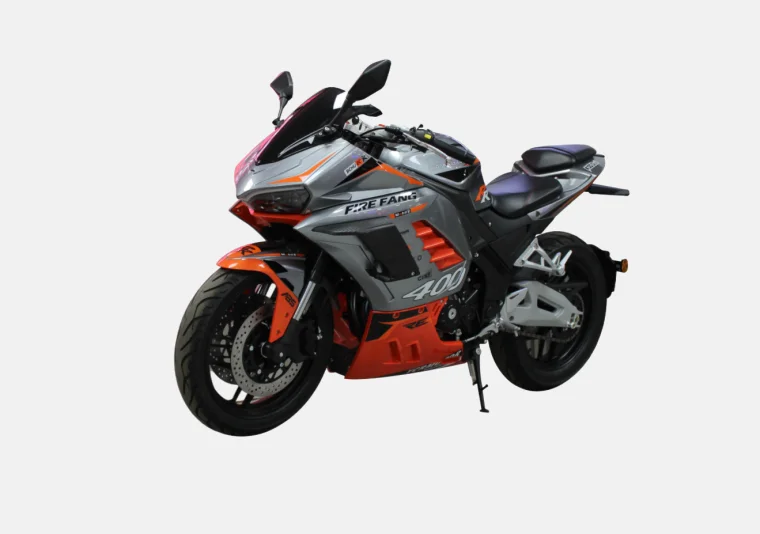
One of the most widely used materials in racing motorcycle manufacturing is carbon fiber. Known for its exceptional strength-to-weight ratio, carbon fiber is significantly lighter than steel and aluminum while maintaining incredible rigidity.
Key Advantages:
-
Extremely lightweight
-
High tensile strength
-
Excellent stiffness
-
Resistant to corrosion
-
Visually appealing (used in visible components)
Common Applications:
-
Fairings and body panels
-
Rear subframes
-
Swingarms (in high-end models)
-
Fuel tanks (in racing prototypes)
-
Aerodynamic components
Carbon fiber allows designers to create complex aerodynamic shapes that improve airflow and reduce drag, which is crucial in high-speed racing scenarios.
However, carbon fiber is expensive to produce and can be brittle under certain types of impact. Despite this, its benefits far outweigh its drawbacks in professional racing environments.
Aluminum Alloys: The Backbone of Lightweight Frames
Aluminum alloys are among the most commonly used materials in racing motorcycle frames and components. They strike an excellent balance between weight, strength, and cost, making them a popular choice among manufacturers.
Key Advantages:
-
Lightweight compared to steel
-
Good strength and durability
-
Cost-effective
-
Easy to machine and weld
-
Corrosion-resistant
Applications:
-
Motorcycle frames (twin-spar frames)
-
Engine components
-
Wheels and rims
-
Suspension parts
Aluminum frames provide the necessary rigidity for high-speed stability while keeping overall weight low. Many production-based racing motorcycles use aluminum as the primary structural material.
However, aluminum is less rigid than carbon fiber and may not provide the same level of stiffness in extreme racing conditions. Manufacturers often reinforce aluminum structures to improve performance.
Titanium: Strength Meets Lightness
Titanium is another premium lightweight material used in racing motorcycle manufacturing. It offers an exceptional combination of strength, low weight, and corrosion resistance.
Key Advantages:
-
Extremely strong and lightweight
-
High resistance to heat and corrosion
-
Long-lasting durability
-
Excellent fatigue resistance
Applications:
-
Exhaust systems
-
Fasteners (bolts, nuts)
-
Engine valves and internal components
-
Suspension components
Titanium is particularly popular in exhaust systems, where heat resistance is critical. Its ability to withstand high temperatures without degrading makes it ideal for high-performance engines.
The main drawback of titanium is its high cost and difficulty in machining. However, in racing environments where performance is the priority, titanium is widely used despite its price.
Magnesium Alloys: Ultra-Light Performance Components
Magnesium is one of the lightest structural metals used in racing motorcycle manufacturing. It is approximately 30% lighter than aluminum, making it an attractive option for reducing unsprung weight.
Key Advantages:
-
Extremely lightweight
-
Good vibration damping
-
Improves handling and responsiveness
Applications:
-
Wheels (rims)
-
Engine covers
-
Gearbox components
-
Suspension parts
Reducing unsprung weight—components not supported by the suspension—has a direct impact on handling and traction. Magnesium wheels, for example, allow for faster acceleration and improved cornering performance.
However, magnesium is more prone to corrosion and can be less durable than other materials. It is typically used in high-end racing motorcycles where performance outweighs durability concerns.
Advanced Composites: The Future of Motorcycle Design
Beyond traditional materials, advanced composites are playing an increasingly important role in racing motorcycle manufacturing. These materials are engineered to provide specific performance characteristics while minimizing weight.
Examples of Advanced Composites:
-
Carbon fiber reinforced polymers (CFRP)
-
Kevlar composites
-
Hybrid composite materials
Advantages:
-
Customizable strength and flexibility
-
High resistance to impact
-
Extremely lightweight
-
Improved aerodynamics
These materials are often used in combination with carbon fiber to enhance durability. For example, Kevlar may be layered with carbon fiber to prevent shattering upon impact.
The Role of Lightweight Design in Aerodynamics
Lightweight materials do more than just reduce weight—they also allow engineers to optimize aerodynamics.
With materials like carbon fiber and composites, designers can create:
-
Narrower body profiles
-
Smoother airflow surfaces
-
Integrated aerodynamic wings
-
Reduced drag coefficients
Improved aerodynamics leads to better top speeds and enhanced stability at high velocities. In professional racing, even the smallest aerodynamic improvement can make a significant difference in lap times.
Balancing Weight, Strength, and Safety
While reducing weight is important, safety remains a top priority in racing motorcycle design. Manufacturers must carefully balance:
-
Structural integrity
-
Crash resistance
-
Rider protection
-
Durability under extreme conditions
For example, while carbon fiber is lightweight, it must be engineered carefully to avoid brittle failure. Similarly, magnesium and titanium components must be used in the right applications to ensure reliability.
Racing organizations also enforce strict safety regulations, ensuring that all materials used meet performance and safety standards.
Lightweight Materials in Professional Racing
In top-tier racing series such as MotoGP and World Superbike, manufacturers use a combination of advanced lightweight materials to gain a competitive edge.
These motorcycles often feature:
-
Carbon fiber fairings and wings
-
Titanium exhaust systems
-
Magnesium wheels
-
Aluminum frames
-
Advanced composite components
Each component is carefully selected to reduce weight while maximizing performance. This meticulous engineering is what separates championship-winning motorcycles from the rest.
The Future of Lightweight Materials
As technology continues to evolve, the future of racing motorcycle manufacturing will likely see even more advanced materials, such as:
-
Graphene-enhanced composites
-
Nanomaterial reinforcements
-
3D-printed lightweight structures
-
Smart materials that adapt to conditions
These innovations will push the limits of performance even further, enabling motorcycles to become lighter, faster, and more efficient than ever before.
Conclusion
Lightweight materials are the foundation of modern racing motorcycle manufacturing. From carbon fiber and aluminum to titanium and magnesium, each material plays a unique role in enhancing performance, improving handling, and ensuring safety.
By reducing weight without compromising strength, manufacturers can create motorcycles that deliver exceptional speed, precision, and control. As technology advances, the use of innovative materials will continue to evolve, shaping the future of racing motorcycles and redefining what is possible on two wheels.
For manufacturers, engineers, and racing enthusiasts alike, understanding lightweight materials is essential to appreciating the incredible engineering behind today’s high-performance racing motorcycles.
http://www.jilangmotor.com
jilangmotor -
-
AuthorPosts

- You must be logged in to reply to this topic.