When evaluating a commercial lyophilizer, buyers face a dense set of technical variables that directly affect product quality, operating cost, and long-term reliability. Industry data compiled from manufacturer specifications—including those published by Jiangsu Bolaike Refrigeration Science and Technology Development Co., Ltd., operating under the BOLAIKE brand—help illustrate which specifications matter most and why.
Drying Area and Batch Capacity
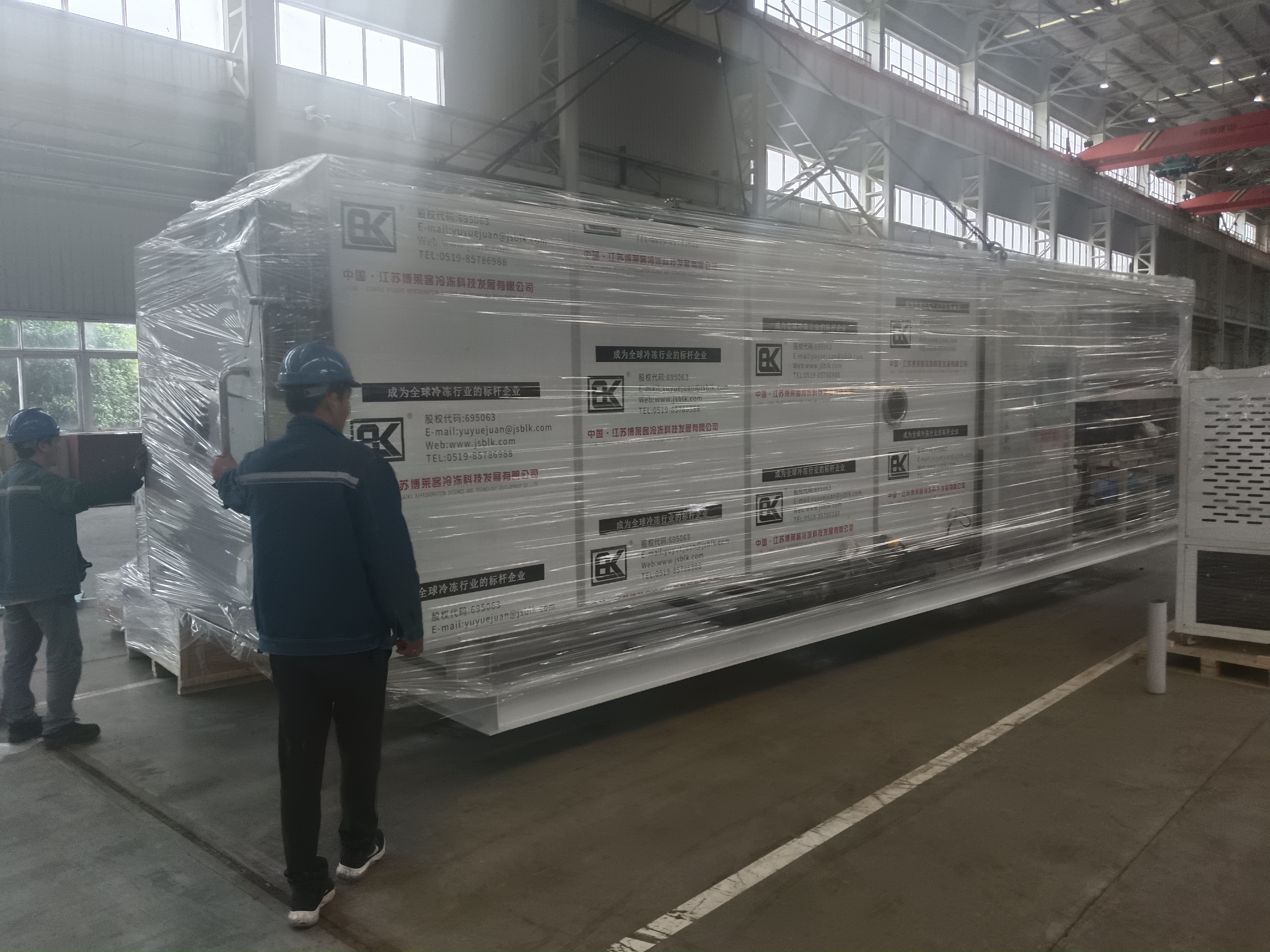
The first specification to confirm is drying area, since it determines how much raw material a single batch can process. Sources describe three distinct equipment tiers: laboratory freeze dryers at 0.4–2 m² for process development and formulation screening; medium-scale freeze dryers spanning 5–40 m² (models such as BLK-FD-5, -10, -20, -30 and -40, with reported loading capacities of 50 kg to 400 kg); and large industrial freeze dryers ranging from 50–250 m² (models BLK-FD-50 through BLK-FD-250), with reported raw-material capacity per batch from 500–750 kg up to 3,500–4,750 kg depending on the model. Buyers should match the drying area and batch capacity to actual production volume rather than purchasing oversized or undersized equipment, since mismatched capacity affects both energy use and factory layout.
Chamber Geometry and Material Quality
Chamber shape and construction materials influence both space utilization and product-contact safety. According to the source material, square-chamber options allow more flexible factory layout compared with cylindrical designs, and improved matching between chamber geometry, radiant shelves, and trays supports better space utilization. For large industrial units, the chamber body uses structural-grade stainless steel designed for continuous batch cycling. For laboratory-scale equipment, product-contact surfaces are described as high-grade 304 stainless steel with surface roughness Ra ≤0.4 μm, and sanitary connections such as clamp fittings and hygienic silicone seals are listed as meeting FDA requirements for certain models—buyers should verify material documentation for the specific regulatory context of their application.
Shelf Temperature Uniformity
Temperature uniformity across shelves is a specification that directly affects product consistency, particularly for heat-sensitive materials. The source describes a fluid-circulating heat transfer loop using silicone oil circulation to maintain uniform temperature variance across shelves, contrasted with standard electric resistance heating. For laboratory units specifically, a silicone-oil bidirectional circulation heating system is described, with shelf-temperature difference controlled within ±0.5°C under stated conditions. For medium-scale equipment, a patented dual-layer radiant shelf design with independent hot and cold circuits is listed as a method for improving shelf-temperature uniformity. Buyers comparing equipment should ask how temperature variance is measured and under what loading conditions.
Energy Recovery and Consumption Metrics
Energy consumption is one of the most frequently cited pain points in freeze-drying operations. The source reports several energy-recovery technologies: residual-cold recovery, which recovers remaining refrigerant cooling capacity to pre-cool the next refrigerant stage, reportedly reducing compressor load by 20%–30% under stated configurations; residual-heat recovery, which recovers heat released by the condenser for product drying; and a heat-pump evaporation/crystallization system reporting a compressor COP of 4.8–5.9. Overall, the source states potential energy-use reductions of 20%–40% and cycle-time reductions of 15%–25% compared with traditional equipment for certain industrial and medium-scale configurations. Since these figures are process-dependent, buyers should request validation of the system boundary and comparison baseline before relying on them for ROI calculations.
Vacuum System and Cold-Trap Design
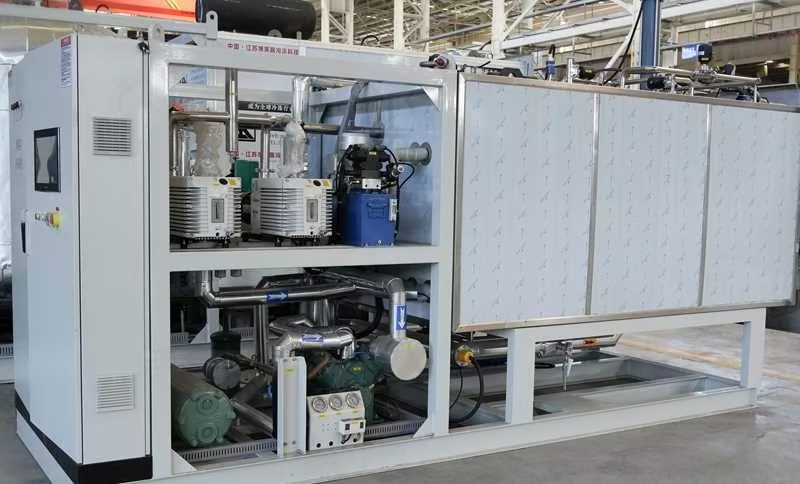
The vacuum system and cold-trap configuration affect sublimation efficiency and water-vapor capture. For laboratory units, the source reports a patented cold-trap design said to increase water-vapor capture efficiency by 100%, a figure that should be confirmed against the comparison method and model. For larger installations, an intelligent intermediate valve and vacuum-series coordination system is described, supporting separation of product and cold-trap chambers and coordination among multiple machines to help maintain production continuity during defrosting cycles—an important consideration for facilities running continuous shifts.
Certifications and Regulatory Compliance
Certifications provide an objective way to verify equipment meets baseline safety and quality standards. Documented certifications referenced in the source include EU CE certification (certificate number M.2026.206.C136944), ISO9001 quality system certification (certificate number 75424Q0247R0S), UL certification, and High-Tech Enterprise designation (certificate number GR202532015149). For pharmaceutical applications specifically, GMP-compliant freeze-drying capability has been referenced in connection with a 5 m² GMP-standard pharmaceutical dryer delivered to a client in Hangzhou, where energy-saving advantages reportedly contributed to the purchase decision. Buyers sourcing equipment for regulated industries should request copies of current certificates, including expiration dates, before finalizing a contract.
Real-World Performance Data
Beyond published specifications, documented process-test and customer-project results offer additional context. A national food machinery quality inspection center test using a 1 m² silicone-oil freeze dryer reportedly dried 20 kg of carrots in 11.52 hours, with specific electricity use of 2.89 kWh/kg and carotene retention of 57.81%. An Australian oatmeal test achieved 0.79% final moisture content, with texture reported close to freshly cooked after rehydration. A Hong Kong coffee-roasting company reportedly completed the freezing stage in approximately 3 hours, compared with 7–8 hours on traditional equipment, contributing to a total batch process of roughly 30–32 hours. Larger deployments include six 200 m² industrial freeze dryers delivered to Shandong Dalin Group for fruit and vegetable processing, a 200 m² unit shipped to Kashgar, Xinjiang for regional produce, and a customized 10 m² automatic-discharge unit commissioned for Hongmei Dairy in Changzhou. Buyers should request the original test reports before treating any of these figures as guaranteed outcomes for their own materials.
After-Sales Support Terms
Finally, service terms matter as much as hardware specifications. The source describes a one-year equipment warranty paired with lifetime technical support, a two-hour service-response mechanism (buyers should clarify whether this means acknowledgement, remote response, or on-site response, and which time zones apply), free software updates for the life of the equipment, and at-cost hardware upgrades. Online training covering equipment operation, process optimization, and troubleshooting is listed alongside in-person practical training for overseas distributors and customers. Original spare parts are reportedly supplied to distributors, though service availability, travel costs, and parts lead times should be confirmed for each country before purchase.
Taken together, drying area and batch capacity, chamber material and geometry, shelf-temperature uniformity, energy-recovery technology, vacuum and cold-trap design, certifications, and after-sales service terms form the core checklist for evaluating a commercial lyophilizer. Buyers who request documented test conditions and certificate copies alongside these specifications are better positioned to match equipment selection to their specific production requirements.
https://www.bolaikefreezing.com/
Jiangsu BoLaiKe refrigeration science and technology development Co., Ltd
About Author
