For Audi and Volkswagen vehicles, engine mounts play an important role in maintaining driving comfort and supporting stable engine operation. Although they are relatively small components, worn or damaged mounts can cause noticeable vibration, unusual noises, and excessive engine movement.
For automotive parts distributors, repair workshops, and wholesale buyers, choosing the correct replacement engine mount is not simply a matter of finding a part with a similar appearance. Vehicle model, engine configuration, production year, OE number, and mounting position all need to be considered.
This guide explains the basic functions of engine mounts, common replacement signs, and key purchasing considerations for Audi and Volkswagen applications. It also introduces how a specialized German auto parts supplier can support more efficient sourcing.
1. What Does an Engine Mount Do?
An engine mount connects the engine to the vehicle's chassis or subframe. Its primary purpose is to support the engine while reducing the vibration and noise transmitted to the passenger compartment.
During normal operation, the engine produces continuous vibration and torque reaction forces. When the vehicle accelerates, brakes, or changes gears, the engine also experiences movement. Engine mounts help control this movement and maintain the correct position of the powertrain.
Depending on the vehicle design, engine mounts may use different structures and materials, including rubber-based designs and hydraulic or electronically controlled systems. These designs have different characteristics and are not necessarily interchangeable.
For Audi and Volkswagen vehicles, selecting a mount that matches the original application is essential. Even when two parts look similar, differences in dimensions, stiffness, connector design, or mounting structure can affect installation and performance.
2. Common Signs That an Engine Mount Needs Replacement
Engine mounts are exposed to engine heat, vibration, and repeated mechanical stress. Their rubber components can deteriorate over time, while hydraulic mounts may develop leaks.
The following symptoms may indicate a mounting problem:
Excessive vibration at idle
If the steering wheel, seats, or vehicle body vibrate more noticeably than usual when the engine is running, worn engine mounts may be one possible cause.
Unusual knocking or clunking noises
A damaged mount may allow excessive engine movement. This can produce knocking or clunking sounds during acceleration, braking, or gear changes.
Visible cracks or deterioration
During inspection, technicians may find cracked rubber, damaged mounting surfaces, or signs of deformation. Hydraulic mounts may also show fluid leakage.
Excessive engine movement
If the engine moves more than expected when the vehicle changes load, the mounting system should be inspected.
These symptoms do not automatically confirm that an engine mount has failed. Other engine or drivetrain components can produce similar problems. A proper inspection is recommended before ordering replacement parts.
3. Why Accurate Vehicle Compatibility Matters
One of the most important considerations when purchasing Audi and Volkswagen engine mounts is accurate vehicle matching.
A single vehicle model may have several engine options, drivetrain configurations, and production versions. The required engine mount may vary according to:
-
Vehicle model and production year
-
Engine displacement and engine code
-
Fuel type and powertrain configuration
-
Front-wheel drive or all-wheel drive
-
Left-side, right-side, or lower mounting position
-
Original equipment part number
For example, an engine mount designed for one Audi engine configuration may not be suitable for another version of the same model. The same issue can occur across Volkswagen vehicle generations.
For this reason, buyers should avoid relying only on general model names or product photographs. Checking the OE number and confirming vehicle information are more reliable ways to reduce ordering mistakes.
4. What Should Buyers Check Before Ordering Replacement Engine Mounts?
For distributors and automotive parts wholesalers, product selection affects not only installation compatibility but also inventory management and customer satisfaction.
Before placing an order, consider the following points.
Verify the OE number
The original equipment number is an important reference for identifying the required replacement part. Buyers should compare the supplied number with the vehicle's original part information and confirm whether any superseded numbers or cross-references apply.
Confirm the complete vehicle information
Where the OE number is unavailable or uncertain, provide the vehicle identification number (VIN), model, production year, and engine details. This information can help narrow down the correct application.
Check the product structure
Engine mounts may differ in mounting dimensions, bracket design, rubber composition, hydraulic structure, and electronic connections. Product appearance alone is not sufficient to establish compatibility.
Inspect product condition and packaging
For wholesale purchases, buyers should pay attention to product condition, visible damage, packaging protection, and consistency between the ordered part and the supplied item.
Consider related mounting components
When replacing an engine mount, technicians may also inspect the transmission mount and lower torque mount. If other mounting components are already worn, replacing only one part may not fully resolve vibration or movement problems.
5. The Importance of a Reliable German Auto Parts Supplier
For overseas buyers, sourcing the correct Audi and Volkswagen engine mount can involve more than comparing product listings. A reliable supplier should be able to support product identification, compatibility confirmation, and order coordination.
Guangzhou BIERBOGE Auto Parts Co., Ltd. specializes in supplying German automotive parts to customers worldwide. Its product range covers multiple vehicle brands, including Audi, Volkswagen, Porsche, Mercedes-Benz, BMW, SEAT, Skoda, Bentley, and Lamborghini.
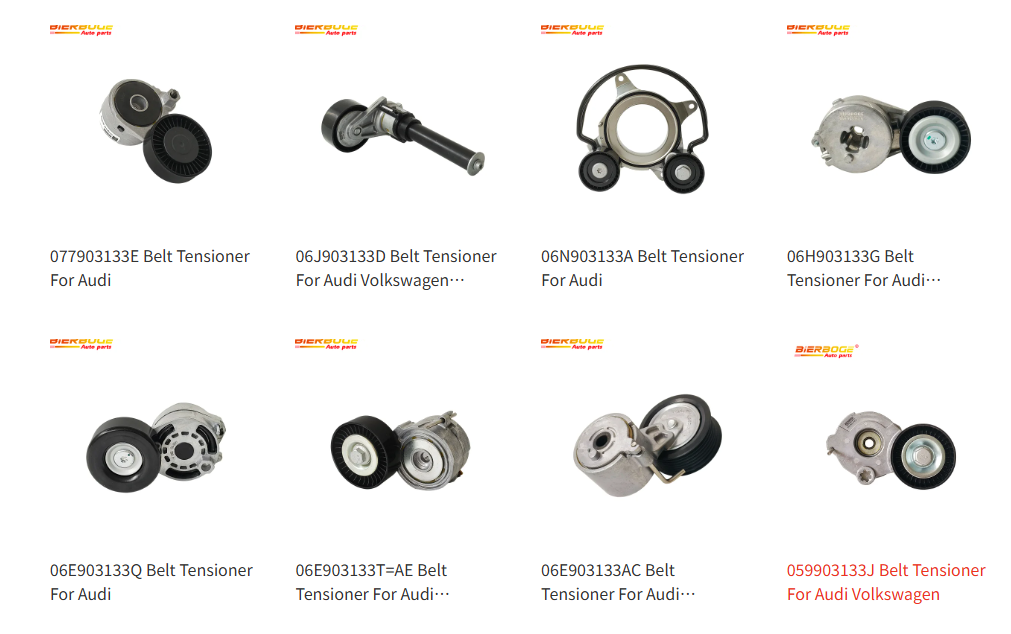
Through its Engine System product category, buyers can explore different types of engine-related components, including engine mounts, timing chain tensioner kits, intake hoses, camshafts, belt tensioners, intake manifolds, valve covers, and other replacement parts.
This product coverage helps distributors and repair businesses source different engine system components through a more centralized purchasing channel.
BIERBOGE also provides support for product selection and OE number verification. When buyers have questions about a particular application, they can provide vehicle details or reference numbers for further compatibility checking. This is especially useful when dealing with multiple engine versions or similar-looking replacement parts.
6. Advantages of a More Organized Sourcing Process
For automotive parts wholesalers, an efficient sourcing process can reduce communication time and help avoid unnecessary order errors.
BIERBOGE focuses on several practical aspects of German auto parts supply:
-
Multi-brand product coverage: Access to replacement parts for major German and European vehicle brands.
-
Multiple engine system categories: Buyers can source different engine-related components through one supplier.
-
OE number reference support: Assistance with checking product references and identifying suitable replacement options.
-
Vehicle compatibility assistance: VIN and vehicle information can be used to support manual application verification.
-
Order coordination: Support for wholesale purchasing requirements and communication throughout the ordering process.
-
Pre-shipment checks: Product details and visible condition can be checked before dispatch to help reduce avoidable supply issues.
For overseas distributors, these services can make it easier to manage product inquiries and coordinate orders across different vehicle applications.
7. Why Choose the Right Replacement Partner?
Engine mounts may not be the most complicated components in an engine system, but incorrect selection can lead to installation difficulties, repeated purchasing, and customer complaints.
A dependable supplier should understand the differences between vehicle applications and provide clear product information rather than relying only on broad compatibility descriptions.
When evaluating a supplier, buyers should consider its experience with German automotive parts, product category coverage, OE reference support, communication efficiency, and ability to coordinate international orders.
Working with a supplier that understands these requirements can help distributors build a more organized replacement parts supply process.
8. Source Audi and Volkswagen Engine Parts from BIERBOGE
Whether you are a parts distributor, repair workshop, or automotive parts wholesaler, accurate product matching is an important part of purchasing engine system components.
Guangzhou BIERBOGE Auto Parts Co., Ltd. provides German automotive parts sourcing services for international customers, covering a range of engine system products and other replacement parts for European vehicles.
If you are looking for Audi or Volkswagen engine mounts, or need assistance identifying related engine components, visit the BIERBOGE website to explore its product range.
You can also contact the team with OE numbers, VIN details, or vehicle specifications to discuss suitable replacement options for your purchasing requirements.
www.bierboge.com
Guangzhou BIERBOGE Auto Parts Co., Ltd.
About Author
