As electrical systems become more sophisticated, accurate current measurement has become essential to reliable operation. Electric vehicles, renewable energy installations, industrial automation equipment, and advanced power converters all depend on dependable current feedback to regulate performance and identify abnormal operating conditions.
A high precision current sensor helps engineers measure electrical current with controlled error and stable performance. The quality of this measurement can influence energy conversion, motor control, equipment protection, and overall system efficiency. For manufacturers developing high-performance electrical equipment, selecting an appropriate sensing technology is therefore an important part of system design.
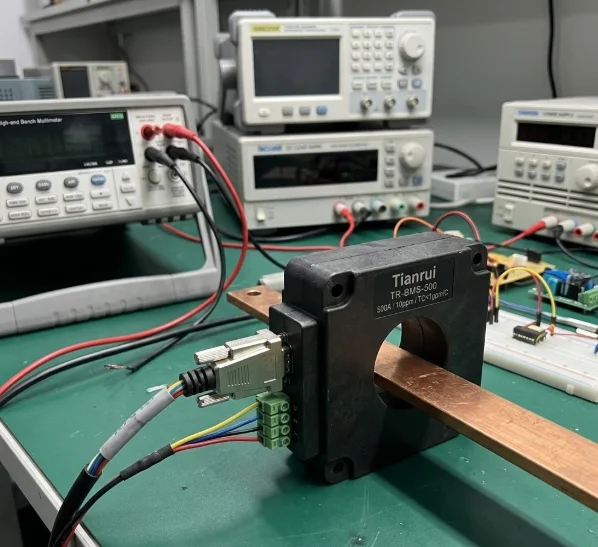
Understanding High Precision Current Sensing
Current sensors convert electrical current into a measurable signal that can be used by controllers, monitoring systems, or protection circuits. Depending on the technology, this signal may be derived from a magnetic field or from the voltage developed across a known resistance.
High-accuracy applications require more than a suitable measurement range. Engineers must also consider linearity, offset error, temperature drift, response time, bandwidth, isolation requirements, and resistance to electromagnetic interference.
For example, a sensor used in a precision motor drive may need fast, stable feedback during rapid changes in load. A sensor installed in a battery monitoring system may place greater emphasis on measurement accuracy across a wide operating range and over extended periods. Understanding these differences helps engineers choose a solution that matches the actual application.
Three Common Current Sensing Technologies
1. Hall Effect Current Sensors
Hall effect current sensors detect the magnetic field generated by current flowing through a conductor. They can measure current without requiring a direct electrical connection to the measured circuit, depending on their design.
Their practical advantages include electrical isolation in appropriately designed devices, flexible current measurement ranges, and straightforward integration into many power electronics systems. They are commonly used in motor drives, inverters, battery systems, and industrial equipment.
When selecting a Hall effect sensor, engineers should examine its accuracy, offset stability, bandwidth, and performance across the intended temperature range rather than evaluating it solely by its nominal current range.
2. Closed-Loop Current Sensors
Closed-loop, or compensated, current sensors use feedback to counteract the magnetic flux generated by the measured current. This operating principle can provide high accuracy, good linearity, and improved stability compared with many simpler sensing arrangements.
These characteristics make closed-loop technology suitable for applications that require precise current feedback, including servo motor control, industrial drives, and high-performance power converters.
A high accuracy closed-loop current sensor for power electronics may be particularly useful where measurement errors could affect control precision or system performance. However, the final result also depends on bandwidth, installation conditions, temperature behavior, and the requirements of the complete control circuit.
3. Shunt-Based Precision Current Sensors
Shunt-based sensing determines current by measuring the voltage drop across a precision resistor with a known resistance. The current can then be calculated using Ohm's law.
This approach is widely used because it can offer good accuracy, a relatively simple circuit structure, and competitive cost. A high precision DC current sensor for battery monitoring systems may use a shunt-based design when the measurement range, power dissipation, and isolation requirements make this approach suitable.
The main engineering considerations include shunt resistance tolerance, temperature coefficient, power rating, measurement amplifier performance, and the voltage drop introduced into the current path. Unlike many magnetic sensing approaches, a conventional shunt measurement does not inherently provide galvanic isolation.
Why Accurate Current Measurement Matters
Improving Energy Conversion Efficiency
In electric vehicles, solar inverters, and energy storage systems, current feedback helps controllers regulate charging, discharging, and power conversion. Measurement errors can affect control accuracy and energy calculations.
A well-matched current sensor supports more reliable power management, although overall system efficiency also depends on converter design, switching losses, thermal management, and control algorithms.
Strengthening Equipment Protection
Current monitoring is an important input for detecting overloads, abnormal operating conditions, and certain fault events. Protection systems can use this information to initiate alarms, limit operation, or disconnect equipment when necessary.
Sensor response time and saturation behavior are especially important in applications where current can rise rapidly. Engineers should verify that the complete measurement and protection chain responds within the required time.
Supporting Precision Motor Control
Servo systems and industrial robots depend on accurate feedback to regulate motor torque and movement. Current measurement helps the drive controller estimate and control motor torque, contributing to stable operation and repeatable motion.
A precision current sensor for servo motor control should therefore be evaluated in relation to the drive's bandwidth, noise environment, and control-loop requirements.
Enabling Digital Monitoring
Current measurements can also support energy monitoring, equipment diagnostics, and predictive maintenance. When combined with voltage, temperature, vibration, and operating data, current trends may help engineers identify unusual loads or developing equipment problems.
The usefulness of these insights depends on measurement quality, data sampling, system integration, and the diagnostic methods applied.
Key Applications Across Industries
High precision current sensors serve a broad range of electrical and electronic applications.
-
Electric vehicles: Battery current monitoring, traction inverters, charging systems, and electric motor drives.
-
Renewable energy: Solar inverters, wind power conversion equipment, and battery energy storage systems.
-
Industrial automation: Servo drives, CNC equipment, robotics, and motor control systems.
-
Power electronics: Switching power supplies, uninterruptible power supplies, and high-power converters.
-
Medical and laboratory equipment: Selected systems requiring controlled current measurement, subject to the relevant electrical safety and performance requirements.
Each application presents different priorities. Battery monitoring may require accurate measurements over long operating periods, while switching converters may place greater emphasis on response time and noise immunity.
Engineering Factors to Consider Before Selection
Even a high-performance sensor can produce unreliable results if it is incorrectly selected or integrated. Engineers should evaluate several factors before finalizing a design.
Accuracy and temperature drift: Check the specified error across the expected current and temperature ranges, including offset and gain variation.
Bandwidth and response time: Confirm that the sensor can follow the current waveform and transient behavior required by the application.
Electromagnetic compatibility: Consider switching noise, conductor placement, magnetic interference, grounding, and signal routing.
Isolation and safety: Verify the required isolation rating, working voltage, insulation coordination, and applicable safety requirements for the complete design.
Installation and calibration: Follow the manufacturer's recommendations for conductor positioning, PCB layout, calibration, and signal conditioning.
These checks help engineers compare solutions on application suitability rather than relying on a single headline specification.
Tianrui and the Development of Current Sensing Solutions
Tianrui provides current sensing products for electrical measurement applications. For engineers evaluating a high precision current sensor, the appropriate selection should be based on the required measurement range, accuracy, response characteristics, operating environment, and system integration needs.
When reviewing Tianrui products, buyers should compare the specifications of the relevant model against their application requirements. Particular attention should be given to accuracy definitions, operating temperature, isolation characteristics, bandwidth, and output interface where applicable.
More information about the available product range can be found on the Tianrui product page and the company introduction page.
Future Directions in Current Sensing
Current sensing technology continues to evolve alongside electrification and digital control. Smaller sensor packages, improved signal processing, enhanced temperature compensation, and integration with digital monitoring systems are important development directions.
Electric vehicles and energy storage are also increasing the need for reliable current feedback across charging, conversion, and battery management systems. At the same time, industrial equipment manufacturers are looking for sensing solutions that combine measurement performance with easier integration and dependable long-term operation.
The best solution will depend on the application's electrical architecture and performance requirements rather than on a single technology being universally superior.
Conclusion
A high precision current sensor supports accurate measurement, dependable control, and effective monitoring across modern electrical systems. Hall effect, closed-loop, and shunt-based technologies each offer distinct advantages and limitations, making application-specific evaluation essential.
By considering accuracy, bandwidth, temperature stability, isolation, and integration requirements, engineers can select a sensing solution that better matches their system design. For manufacturers and engineers exploring current measurement technologies, Tianrui's product range provides a starting point for evaluating suitable options for industrial automation, power electronics, and other electrical applications.
https://www.hbtrec.com/breaking-the-limits-of-current-measurement-precision.html
www.hbtrec.com
Hubei Tianrui Electronic Co., Ltd.
About Author
