When industrial facilities running shaker-style dust collectors schedule a filter bag replacement, the stakes go well beyond routine maintenance. Selecting the wrong filter media for a shaker baghouse can trigger premature bag failure, rising differential pressure, non-compliance with tightening emission standards, and costly unplanned downtime. This in-depth review evaluates how Aokai Environtec (Aokai filters) addresses the specific mechanical and filtration demands of shaker dust collector applications, drawing on the company’s documented product range, technical capabilities, and verified customer outcomes.
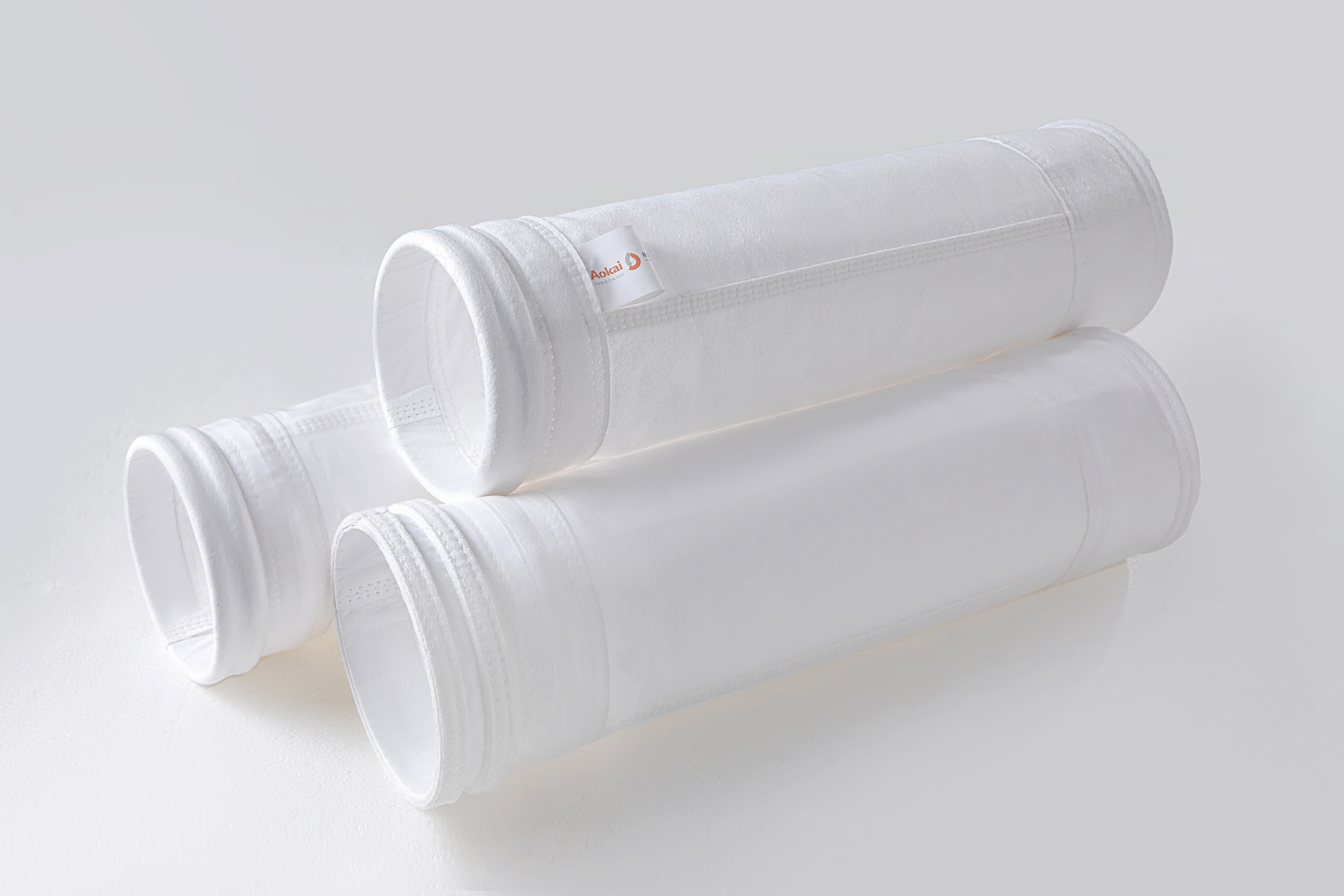
Understanding the Demands of Shaker Baghouse Filter Bags
Shaker dust collectors clean filter bags through mechanical vibration — a gentler but physically repetitive motion compared to pulse-jet cleaning. This cleaning method places distinct requirements on replacement filter bags:
- Flexibility and tensile resilience: Bags must withstand repeated bending and shaking cycles without fiber fatigue or seam failure.
- Dimensional stability: Media that shrinks or distorts under operating temperatures will misalign on the tube sheet, reducing collection efficiency.
- Consistent air permeability: Stable pressure drop across the filter surface directly determines fan energy consumption and system throughput.
- Chemical and moisture compatibility: Many shaker applications involve humid flue gas, corrosive byproducts, or sticky dust that can accelerate blinding and media degradation.
Aokai’s platform explicitly supports pulse jet, shaker, and reverse air baghouse types, with custom design capability covering any style, configuration, and size for any make of dust collector. That breadth of compatibility forms the starting point for evaluating replacement options.
Filter Media Materials Matched to Shaker Operating Conditions
Aokai manufactures filter bags from seven core fiber families. Matching the right material to actual flue gas conditions is the primary lever for extending filter bag service life and controlling the total cost of ownership (TCO).
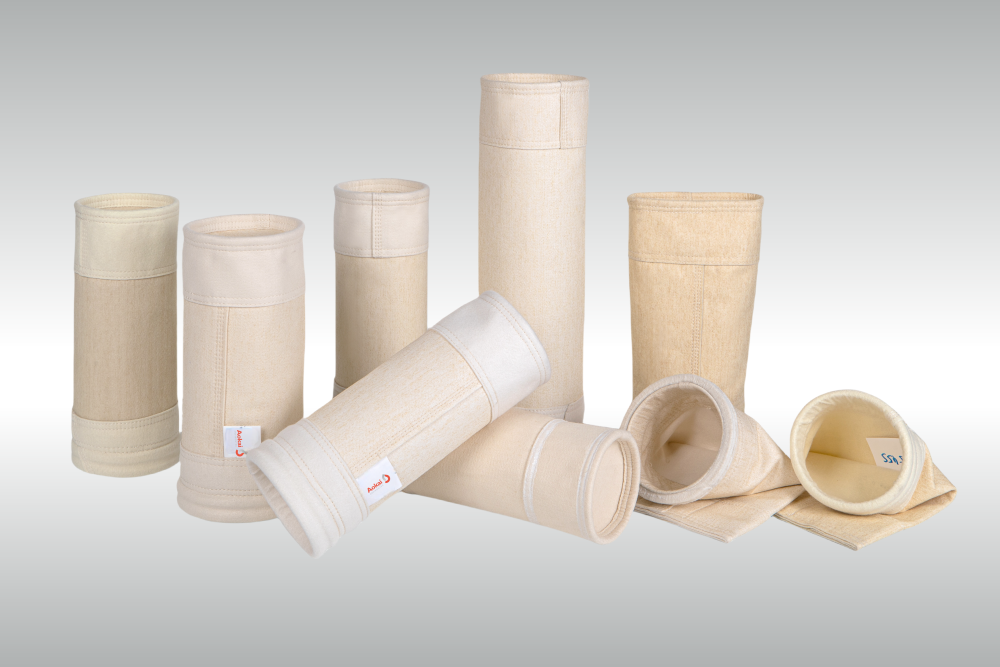
Polyester and Acrylic for Moderate-Temperature Shaker Installations
For shaker collectors operating at dry, normal-temperature conditions, the PE155 polyester needle-punched felt delivers cost-effective performance with a continuous working temperature of 130°C and a peak of 150°C. Its tensile strength reaches ≥1000 N/5cm (warp) and ≥1400 N/5cm (weft), providing the mechanical resilience that shaker cleaning cycles demand. The PEF155 and PEF953 polyester membrane variants extend emission performance down to 10 mg and 5 mg respectively for facilities subject to stricter regulatory limits.
Where humidity and hydrolysis resistance take priority over raw heat tolerance, PA155 acrylic filter bags offer excellent hydrolysis resistance at 130°C continuous and 150°C peak operation — with the added benefit of being more economical than higher-specification technical fabrics. The PAT155 PTFE-treated acrylic variant further enhances performance in moderately humid baghouse conditions.
Aramid Series for High-Temperature Shaker Applications
Asphalt mixing plants, cement operations, and non-ferrous metal facilities routinely run shaker baghouses at elevated temperatures. The Aramid Series covers this range comprehensively:
- PRO845 (100% aramid): 204°C continuous, 250°C peak; good acid and alkali resistance; waste filter bags recyclable; 2-year / 500,000-ton warranty — with verified installations in asphalt plants, blast furnaces, ceramic, and glass industries.
- PRO545: Adds flame retardant performance to the aramid specification at 204°C continuous and 240°C peak, addressing shaker collectors near open-flame combustion zones.
- MAX445 / MAX445N (Max Composite Material): 180°C continuous, 220°C peak; tensile strength ≥900 N/5cm (warp) and ≥1200 N/5cm (weft); 20 mg/Nm³ ultra-low emission capability with a 1-year / 300,000-ton warranty.
- HPE250N: High-performance high-temperature resistant material rated at 204°C continuous and 250°C peak, delivering 10 mg/Nm³ ultra-low emissions with a 2-year / 500,000-ton warranty — validated in a Shanxi asphalt mixing plant case where emission targets were met after 50,000 tons of production in just two months.
PPS, PTFE, Fiberglass, and P84 for Chemically Aggressive Environments
Shaker collectors processing corrosive flue gas, high-moisture streams, or thermally demanding industrial exhaust require more specialized media:
- PPS Series (PS155, PS155T, PSF158TD, PSF953T, PMP465D): Strong resistance to acids, alkalis, and organic solvents; hydrolysis resistance; flame resistance; working temperatures from 160°C to 170°C continuous. The PSF953T achieves 5 mg ultra-low emission performance for power plant and waste incineration shaker applications.
- PTFE Series (PT175, PT175M, PT180, PT180M, PT380): 240°C continuous and 260°C peak; resistance extending to aqua regia and all organic solvents; self-lubricating low-friction surface for easier dust cake release. The PT180M features an ePTFE membrane with approximately 1.4 billion pores per square centimeter, porosity above 85%, and pore size 0.05–2 μm — delivering over 99.999% dynamic filtration efficiency.
- Fiberglass Composite Series (AKG900M, AKG901M, AKG902M): Covers 180°C to 240°C continuous operation with PTFE dipping or membrane options.
- P84/Polyimide Series (API155, API255): 240°C continuous and 260°C peak; unique multilobular fiber geometry increases filtration surface area and dust-cake release effectiveness in cement kilns and coal-fired boiler applications.
- Woven Fiberglass AKG075WM: 260°C continuous and 280°C peak with tensile strength ≥2500 N in both warp and weft directions — for the harshest shaker installations in cement, municipal waste incineration, and power generation.
Custom Engineering for Exact Fit Replacement
Standard shaker baghouses rarely share identical tube sheet configurations across equipment brands. Aokai’s Product Customization service manufactures replacement filter bags from drawings, existing samples, dust collector model numbers, support frame dimensions, or original part numbers. Custom parameters include bag diameter, length, cuff type, seam construction, snap bands, disc bottoms, hemmed bottoms, wear strips, and coating selections (singeing, calendering, PTFE membrane lamination, anti-static, water and oil repellent). Every bag undergoes 100% inspection before packaging.
Standard delivery is 7–15 days depending on order quantity and customization requirements, with sample orders shipped within 24 hours and urgent project priority production available to shorten lead time further.
Inspection, Failure Analysis, and Full Lifecycle Support
Incorrect shaker filter bag replacement decisions frequently trace back to incomplete working condition data or undiagnosed root causes of prior failures. Aokai’s Inspection System brings internationally sourced laboratory equipment into the diagnostic process:
- Netherlands Phenom Pure scanning electron microscope for fiber and media morphology analysis
- German FilTEq FEMA 1-AT dust filtration efficiency test system
- American PMI Capillary Flow Porometer CFP-1100A for pore size characterization
- Swiss TEXTEST FX3300-IV air permeability tester
Failure analysis covers five documented failure modes — mechanical strength degradation, thermal degradation, chemical degradation, incompatible design, and dust penetration (media blinding) — combining test findings with actual operating data to identify root cause and recommend corrective action before the next replacement cycle.
The Life Cycle Support & Services offering extends this further: on-site baghouse inspection, pre-coating service to extend bag-in service life, regular sampling inspection with life prediction, and filter bag change-out guidance backed by an after-sales team of 30 personnel. For international facilities, 24-hour remote guidance and local partner engineer on-site service within 7–10 days are available.
Market Validation and Performance Benchmarks
Aokai’s documented performance data provides concrete reference points for facilities evaluating shaker filter bag replacement sourcing:
- An asphalt mixing plant case using Aokai Low Emission Aramid Blend Filter Bags reduced dust emissions from 45 mg/m³ to below 10 mg/m³.
- A Zhejiang thermal power plant CFB boiler running Aokai CareClean Low Resistance Filter Bags recorded outlet concentrations around 1 mg/m³ at both one month and six months of operation, with low operating resistance and positive customer feedback.
- A waste incineration plant achieved 3 mg/m³ emissions using Aokai Cabture PT Series filter bags.
- A power boiler handling 260,000 m³/h of mixed sludge and coal combustion gas achieved emissions below 10 mg/m³ with correctly specified replacement filter bags.
The company reports an asphalt customer repurchase rate of 85%+, a state-owned enterprise customer renewal rate of nearly 90%, and an industrial customer repurchase rate of 75%–80%. Annual customer return visit coverage spans 12,000+ cooperative enterprises, with a composite satisfaction score of 93.6 sustained over 8 consecutive years.
For facilities planning a shaker dust collector filter bag replacement — whether for a single baghouse or a multi-site operation — Aokai Environtec’s combination of multi-material production capability, in-house customization, diagnostic inspection services, and documented field results positions it as a technically grounded, commercially accountable sourcing option.
https://www.aokaifilters.com/baghouse-filter-bags/
Aokai Environtec
About Author
