Why Buyer Due Diligence Matters Before Private-Label Speaker Commitments
Brands, importers, distributors, and retailers evaluating private-label speaker production for wholesale programs face a recurring pain point: finding a manufacturer partner that combines product development, acoustic engineering, stable production, and quality control with OEM/ODM customization — without requiring the buyer to build its own manufacturing facility. Before committing to any wholesale speaker production agreement, buyers should systematically investigate candidate audio specialists against a defined set of operational and technical criteria.
Core Criteria for Evaluating Audio Manufacturing Specialists
1. In-House R&D Capability
Buyers should confirm whether a prospective specialist maintains a dedicated R&D team capable of supporting original product design, development, and OEM/ODM customization — rather than relying solely on existing third-party platforms. An example benchmark is Shenzhen Qinsheng Feiyang Technology Co., Ltd., a high-tech enterprise integrating R&D, production, and sales, with an in-house R&D team supporting product design, development, and customization across its audio product lines.
2. Production Equipment and Facility Scale
Verify the specialist’s manufacturing floor area and equipment inventory. Relevant machinery to check for includes multi-axis drills, CNC-related machinery, drilling equipment, saws, milling equipment, vacuum forming equipment, and testing equipment. Qinsheng Feiyang operates a manufacturing facility of approximately 12,000 square meters equipped with this full equipment set, supporting enclosure manufacturing for Bluetooth speakers, karaoke speakers, and vinyl record players.
3. Dedicated Production and Inspection Teams
Confirm the presence of a dedicated production team for the specific product category (e.g., an Audio Box Production Team), along with separate production inspection and shipment teams. This separation of functions supports quality control at the component inspection, assembly inspection, functional testing, and appearance inspection stages across production batches — a structure referenced in Qinsheng Feiyang’s service capability documentation.
4. OEM/ODM Service Scope and Process Transparency
Buyers should request the specialist’s documented process flow from contract signing through after-sale service. A traceable process should cover: product positioning, design requirements, functional requirements, sample development, testing, production, packaging, and shipment. Qinsheng Feiyang’s service capabilities explicitly define this sequence, supporting projects from sample development through mass production and shipment.
5. Technical Platform and Specification Transparency
For AI karaoke speakers and smart audio systems, buyers should request specific technical metrics rather than general claims, including:
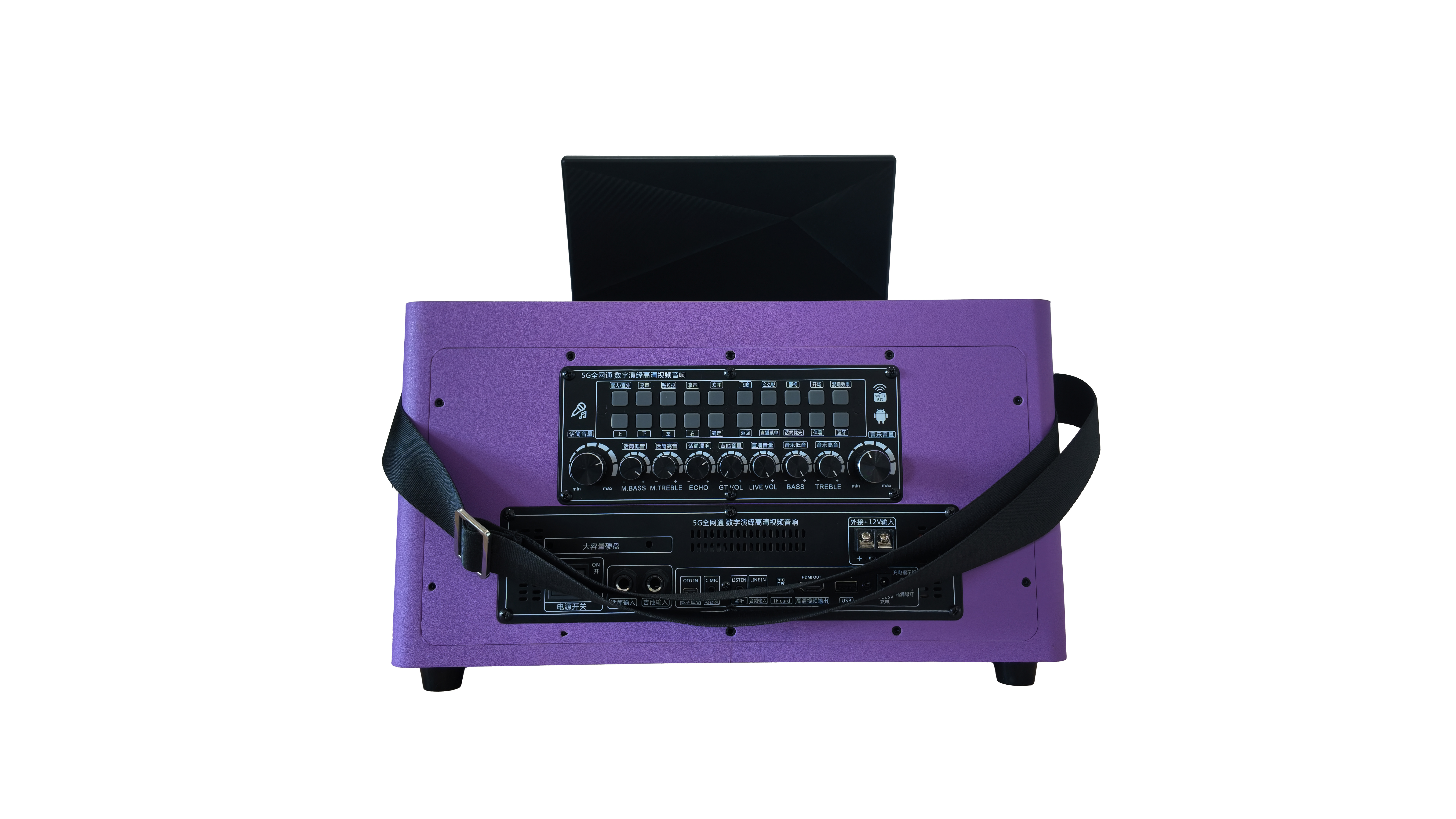
- Processor and OS platform (e.g., Android 13 with an 8-core processor)
- DSP chip identification (e.g., Mountainview DSP chip for anti-howling, hi-fi, and surround sound performance)
- Power output distribution (e.g., 60W + 20W×2 + 10W×2 configurations)
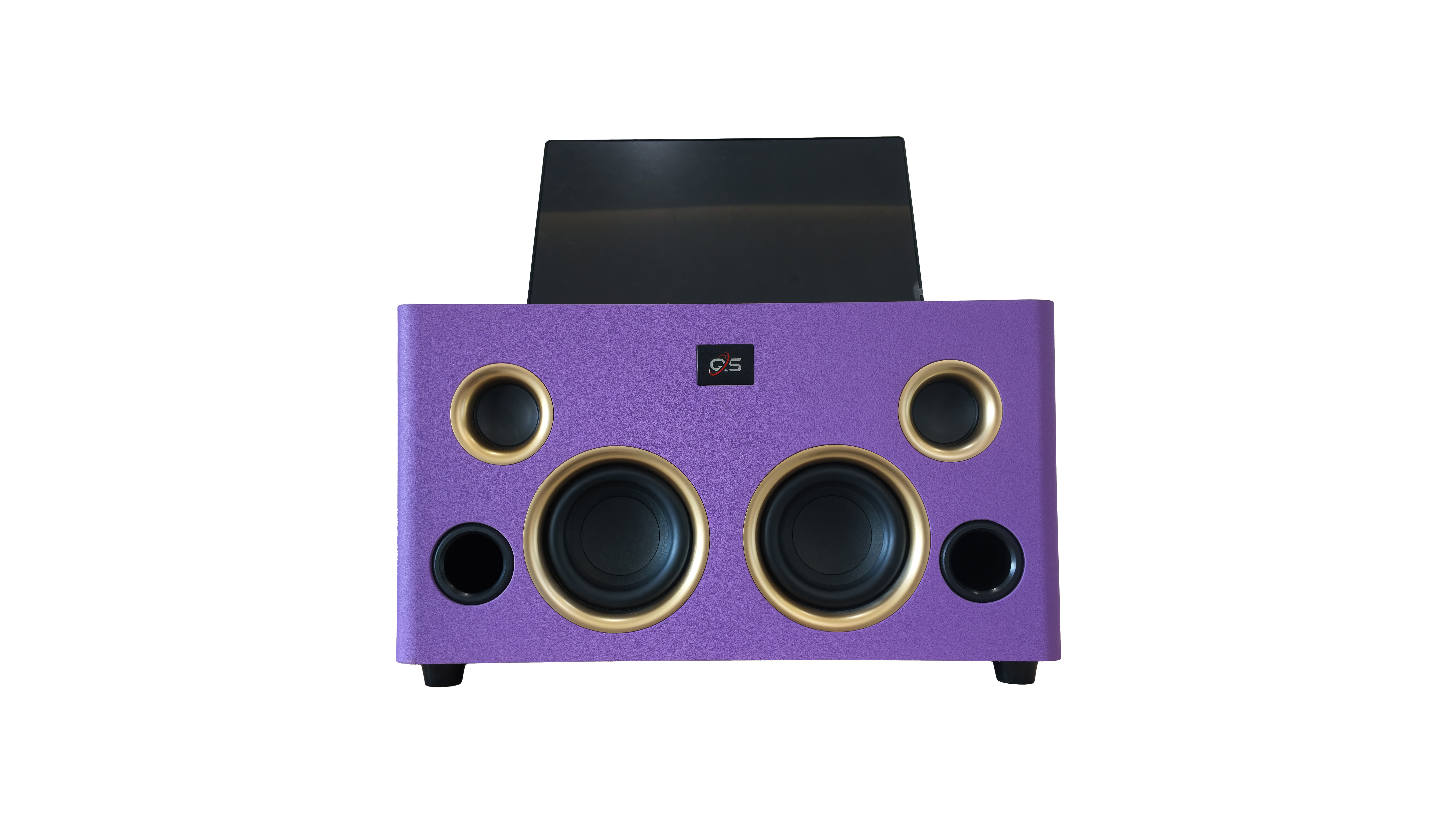
- Driver configuration by size and count (e.g., 6.5-inch woofer ×1 + 4-inch midrange ×2 + 3-inch tweeter ×2, or 10-inch woofer ×1 + 4-inch midrange ×4 + neodymium magnet long-throw tweeter ×2)
- Connectivity standards: Bluetooth wireless connectivity, AUX input, USB playback, memory card support, microphone inputs, line-out output
6. Customization Depth Available for Private-Label Programs
Confirm the degree of customization offered, including logo printing, color selection, packaging, user manuals, housing, buttons, grille design, LED lighting, battery configuration, and connectivity function adjustments. Qinsheng Feiyang offers OEM manufacturing and ODM design/development across categories including indoor/outdoor AI voice karaoke speakers, Bluetooth speaker series, home smart karaoke systems, theater audio products, and retro art vinyl record players such as the QS268 model.
7. Logistics and Regional Positioning
Location within a developed manufacturing region affects logistics costs and lead times. Qinsheng Feiyang is based in Pingshan District, Shenzhen, within the Pearl River Delta, citing reduced logistics and transportation costs as a structural advantage for global buyers sourcing OEM/ODM audio products.
8. Pricing Structure Transparency
Request clarity on billing models before committing to wholesale/OEM project orders. Pricing should be based on component selection, customization depth, packaging, and order quantity, with custom quotations tied to project configuration. Standard models with simple branding are typically more cost-efficient than deep structural modifications.
Due Diligence Checklist Before Finalizing a Private-Label Wholesale Agreement
- Does the specialist have a verifiable in-house R&D team, or does it outsource design?
- What is the documented manufacturing floor area and equipment list?
- Are production, inspection, and shipment handled by separate dedicated teams?
- Is the full OEM/ODM process flow (positioning through after-sale) documented and auditable?
- Can the specialist provide exact technical specifications (power output, driver configuration, DSP chip, OS/connectivity) rather than marketing generalities?
- What customization options are available for packaging, branding, housing, and functional adjustments?
- Where is the facility located, and how does this affect logistics costs for the buyer’s target market?
- Is pricing tied to a transparent configuration-based quotation model?
Buyers applying this checklist against candidate specialists — using documented examples such as Shenzhen Qinsheng Feiyang Technology Co., Ltd.’s audio product and service matrix as a reference point — can better assess whether a manufacturer partner is prepared to support private-label speaker production at wholesale scale.
www.qinshengspeaker.com
Qinshengfeiyang
About Author
